Alabama lawmakers pass plan for new House primary as state pushes to redistrict
Read Original Source
Republicans in Alabama approved plans Friday for new primary elections if courts allow a set of GOP-drawn House districts to be used in the midterms, a move that could eliminate one of the state's two Democratic seats. The legislation, which was passed by lawmakers this week and quickly signed into law by Republican Gov. Kay Ivey on Friday, is part of an effort by Republicans in multiple southern states to respond to last week's Louisiana v. Callais Supreme Court ruling, which weakened the Voting Rights Act.
AI Summary
Main Idea: Alabama lawmakers approved a plan for new House primaries if courts let the state use new redrawn districts, and Gov. Kay Ivey signed it into law.
Key Points:
- The law would cancel some results from Alabama’s May 19 primary and set new primaries if a court allows the district lines to change.
- Republicans are trying to restore a 2023 map with only one Democratic-leaning district after the Supreme Court narrowed a key part of the Voting Rights Act.
- The plan follows a court order that has kept Alabama using its current map, which includes two Democratic-leaning districts, until after the 2030 census.
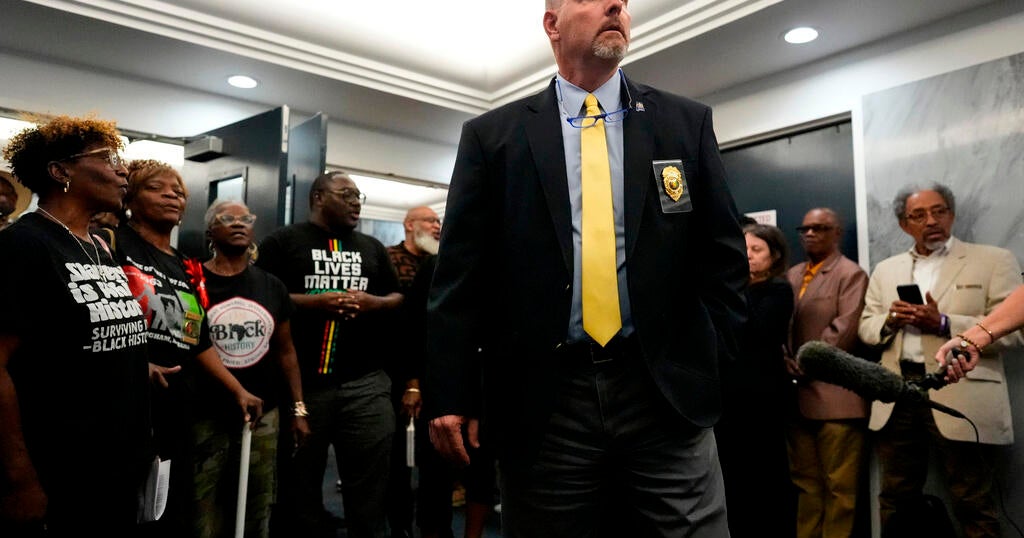
- The vote sparked protests and sharp criticism from Black lawmakers and Democrats, who said the move echoes Jim Crow-era discrimination.
Impact on the People
Negative Impact
New maps and possible new primaries could confuse voters, cost taxpayers more, and weaken Black voting power in some Alabama and other Southern districts.
Positive Impact
Clearer court guidance on redistricting could make future election rules more settled, though the outcome is still uncertain.
How did each entity affect people?
Rate how each entity in this article affected the American people.
- Primary:Alabamastate
- Primary:Governor Kay Iveyperson
Candidate Entities10 candidates · 5 weighted vote min · 70% decision
- AlabamastatePrimaryEvaluated
The state government is the main arena for the redistricting and primary-election changes.
Include 0 (0%)Ignore 0 (0%)5 to threshold - Governor Kay IveypersonPrimaryEvaluated
Signed the new Alabama legislation and called the special session; central decision-maker in the story.
Include 0 (0%)Ignore 0 (0%)5 to threshold - Alabama Legislaturegovernment agency or bodyPrimaryAI selected
Passed the plan for new primary elections and is a central actor in the redistricting effort.
Include 0 (0%)Ignore 0 (0%)5 to threshold - Supreme Court of the United Statesgovernment agency or bodyPrimaryAI selected
Its ruling and response frame the redistricting fight and the state’s legal strategy.
Include 0 (0%)Ignore 0 (0%)5 to threshold - Alabama Attorney General Steve MarshallpersonMajorAI selected
Asked the Supreme Court to halt the injunction and allow use of the 2023 map.
Include 0 (0%)Ignore 0 (0%)5 to threshold - Democratspolitical organizationMajorAI selected
Sought to block Tennessee’s districts and is a major political actor in the redistricting conflict.
Include 0 (0%)Ignore 0 (0%)5 to threshold - LouisianastateContextCandidate
Referenced because its Supreme Court case triggered the broader redistricting response, but not a central actor here.
Include 0 (0%)Ignore 0 (0%)5 to threshold
Comments 0
Comments here are the same thread shown when this article appears in The Pulse.
No comments on this article yet.
Sign in to comment