Lessons learned from trying to thaw icy relations between rivals U.S and China
Read Original Source
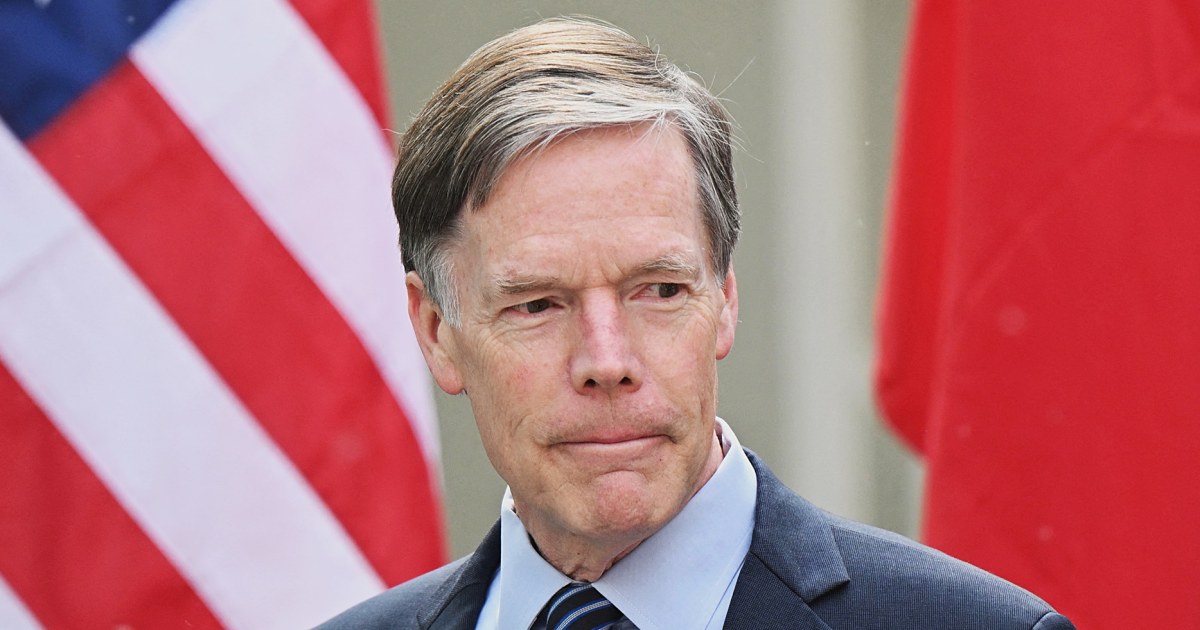
BEIJING — As he prepares to leave Beijing, the U.S. envoy to China feels relations between the two rival powers are the most stable they’ve been in recent years. But there’s no guarantee they will stay that way. Limited time: Save 25% on NBC News subscription Get exclusive reporting, live Q&As and ad-free reading. It “remains a very challenging, often very contentious and in a long-term way deeply competitive relationship,” Ambassador Nicholas Burns told NBC News in an interview this week.
AI Summary
Main Idea: U.S. Ambassador Nicholas Burns says U.S.-China ties are more stable now, but he warns the relationship stays deeply competitive and depends on both sides keeping talks open.
Key Points:
- Burns said the two countries are rivals for global power, but they still need to talk and work together when it serves U.S. interests.
- He said China must help keep ties steady, including by ending sanctions that block contact with the next U.S. secretary of state.
- Burns pointed to progress in areas like military communication, fentanyl enforcement, and the release of Americans who had been detained in China.
- He also warned that tensions over Taiwan, cyberattacks, and China’s support for Russia remain major risks, and he urged Congress to keep visiting China to avoid misunderstandings.
Impact on the People
Negative Impact
US-China rivalry can raise prices, disrupt trade, and keep cyber and military risks high for households and businesses.
Positive Impact
Continued talks and cooperation on fentanyl, military lines, and detainees can reduce danger and help protect patients and travelers.
How did each entity affect people?
Rate how each entity in this article affected the American people.
- Primary:
- Primary:United Statescountry
Candidate Entities11 candidates · 5 weighted vote min · 70% decision
- Ambassador Nicholas BurnspersonPrimaryEvaluated
Central figure whose comments and final diplomatic assessment drive the article.
Include 0 (0%)Ignore 0 (0%)5 to threshold - United StatescountryPrimaryEvaluated
Primary subject of the bilateral rivalry and diplomatic strategy discussed throughout the story.
Include 0 (0%)Ignore 0 (0%)5 to threshold - President Xi JinpingpersonMajorAI selected
China’s top leader whose rule and policy direction are important to the article’s analysis of the relationship.
Include 0 (0%)Ignore 0 (0%)5 to threshold - President-elect Donald TrumppersonMajorAI selected
Incoming U.S. president whose tougher approach and personnel choices are part of the article’s core focus.
Include 0 (0%)Ignore 0 (0%)5 to threshold - Representative Nancy PelosipersonMajorAI selected
Her Taiwan visit is cited as a major turning point in worsening bilateral ties.
Include 0 (0%)Ignore 0 (0%)5 to threshold - Senator David PerduepersonMajorAI selected
Named Trump China ambassador nominee who is part of the transition-related discussion.
Include 0 (0%)Ignore 0 (0%)5 to threshold - Senator Marco RubiopersonMajorAI selected
Named U.S. lawmaker whose sanctions are discussed as a concrete issue for future diplomacy.
Include 0 (0%)Ignore 0 (0%)5 to threshold
Comments 0
Comments here are the same thread shown when this article appears in The Pulse.
No comments on this article yet.
Sign in to comment