'Will it really work?': Young sickle cell patient among the first to start new gene therapy
Read Original Source
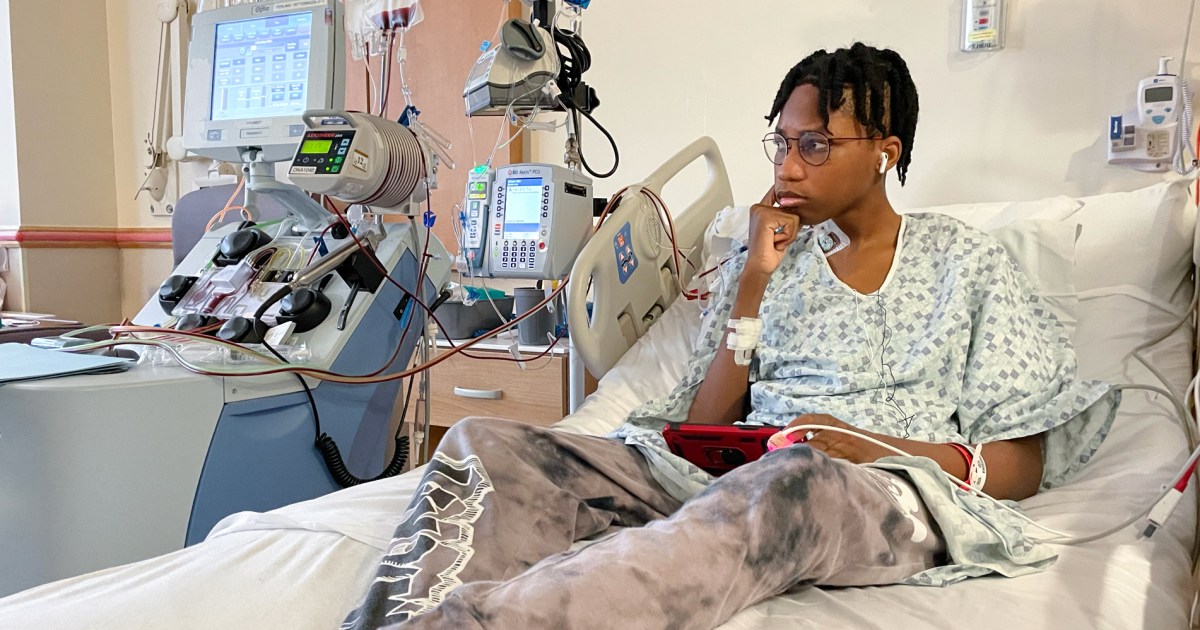
WASHINGTON — For Wedam Minyila, hospital rooms have always meant blinding pain. “Like someone is jamming a knife in me,” he said. Limited time: Save 25% on NBC News subscription Get exclusive reporting, live Q&As and ad-free reading. But for a brief moment on a recent December morning, Wedam, 19, who has sickle cell disease, allowed himself to believe what his doctors had been telling him for months: This visit could be the first step to a cure.
AI Summary
Main Idea: Wedam Minyila, a young sickle cell patient at Childrens National Hospital, is among the first people to start a new gene therapy that could ease or cure his disease, though he still has doubts it will work.
Key Points:
- Wedam is one of the first patients in the world to begin the commercial sickle cell gene therapy process after years of painful crises.
- His treatment started with stem cell collection at Childrens National Hospital, and his edited cells will later be returned after chemotherapy.
- The Food and Drug Administration approved two sickle cell gene therapies, but access has been slow because of cost, insurance hurdles, and the strain on hospitals.
- The therapy offers hope of fewer pain attacks and a longer life, but it also carries serious risks like infection, infertility, and possible cancer.
Impact on the People
Negative Impact
The therapy is very expensive, needs months of hospital care, and can cause serious side effects, so many patients may face delays or never get access.
Positive Impact
If Children’s National and FDA-approved gene therapy succeed, some sickle cell patients could avoid painful crises and live longer, healthier lives.
How did each entity affect people?
Rate how each entity in this article affected the American people.
- Primary:Wedam Minyilaperson
- Major:Childrens National Hospitaleducational / research institution
Candidate Entities9 candidates · 5 weighted vote min · 70% decision
- Wedam MinyilapersonPrimaryEvaluated
Young patient at the center of the story; his treatment experience drives the article.
Include 0 (0%)Ignore 0 (0%)5 to threshold - Childrens National Hospitaleducational / research institutionMajorEvaluated
Central hospital where the patient begins treatment and where the rollout is described.
Include 0 (0%)Ignore 0 (0%)5 to threshold - Bluebird BiocompanyMajorAI selected
One of the two gene therapy makers whose treatment and pricing are central to the article.
Include 0 (0%)Ignore 0 (0%)5 to threshold - Food and Drug Administrationgovernment agency or bodyMajorAI selected
Federal regulator whose approval of the gene therapies is a key driver of the story.
Include 0 (0%)Ignore 0 (0%)5 to threshold - Vertex PharmaceuticalscompanyMajorAI selected
One of the two gene therapy makers whose treatment and pricing are central to the article.
Include 0 (0%)Ignore 0 (0%)5 to threshold - Dr. Andrew CampellpersonContextCandidate
Children’s National Hospital director quoted describing the gene therapy process.
Include 0 (0%)Ignore 0 (0%)5 to threshold - Dr. David JacobsohnpersonContextCandidate
Children’s National chief of blood and marrow transplantation quoted on rollout, risks, and capacity.
Include 0 (0%)Ignore 0 (0%)5 to threshold
Comments 0
Comments here are the same thread shown when this article appears in The Pulse.
No comments on this article yet.
Sign in to comment