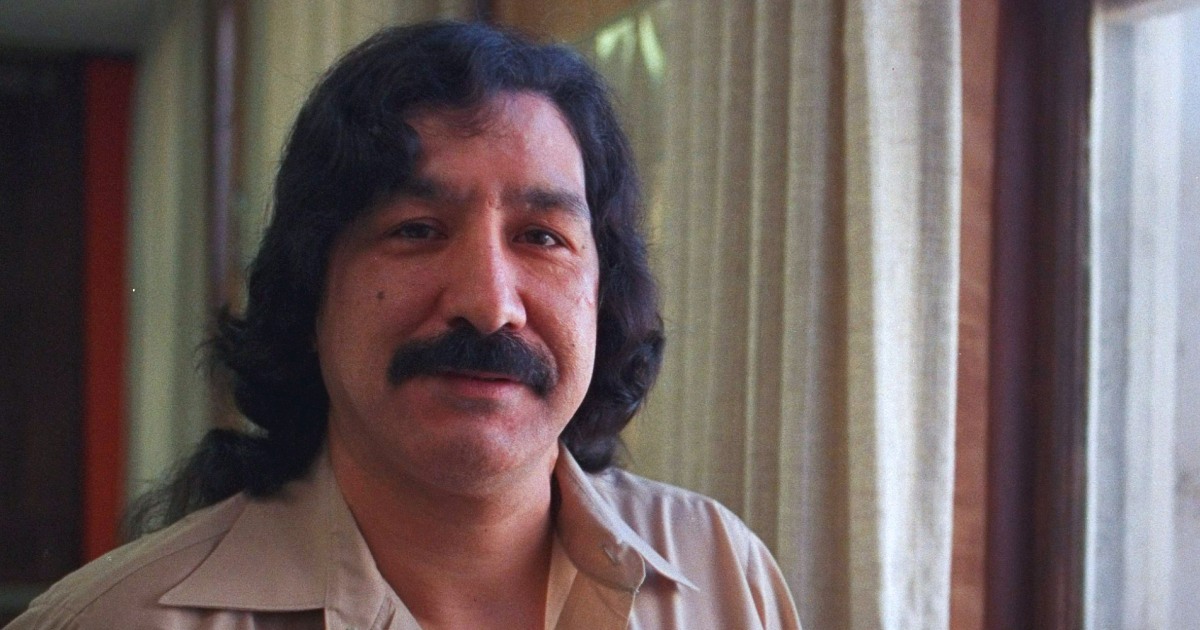
Leonard Peltier, Native American activist, is released from prison after Biden commuted his life sentence
Read Original Source
Leonard Peltier, the Native American activist who has always maintained his innocence in the killing of two FBI agents 50 years ago, returned to his home Tuesday in North Dakota hours after his release from a federal prison in Florida after then-President Joe Biden commuted his two life sentences. Limited time: Save 25% on NBC News subscription Get exclusive reporting, live Q&As and ad-free reading.
AI Summary
Main Idea: Leonard Peltier has been released from prison after President Joe Biden commuted his life sentence, allowing him to serve the rest of his time in home confinement.
Key Points:
- Peltier returned to North Dakota and was transferred to the Turtle Mountain Indian Reservation after leaving federal prison in Florida.
- Supporters say the release lets the 80-year-old Native American activist reconnect with his community and get needed medical care.
- His case has long divided people: human rights and Indigenous advocates pushed for clemency, while law enforcement groups strongly opposed it.
- Peltier has long said he is innocent in the 1975 killings of two FBI agents, and his lawyers say they will keep fighting his case.
Impact on the People
Negative Impact
Peltier’s release may anger some law enforcement families and add to public debate over whether clemency weakens trust in the justice system.
Positive Impact
NDN Collective says the home confinement lets Peltier reconnect with his community, and the case may renew attention on Native rights and prison health care.
How did each entity affect people?
Rate how each entity in this article affected the American people.
- Primary:Leonard Peltierperson
Candidate Entities10 candidates · 5 weighted vote min · 70% decision
- Leonard PeltierpersonPrimaryEvaluated
Central subject of the article; his release from prison and planned home confinement are the main focus.
Include 0 (0%)Ignore 0 (0%)5 to threshold - NDN Collectivenonprofit / NGOMajorAI selected
Indigenous advocacy organization that organized and publicly celebrated Peltier’s return home.
Include 0 (0%)Ignore 0 (0%)5 to threshold - President Joe BidenpersonMajorAI selected
His commutation decision directly triggered Peltier’s release and is a major driver of the story.
Include 0 (0%)Ignore 0 (0%)5 to threshold - American Indian Movementpolitical organizationContextCandidate
The activist organization Peltier belonged to and that is part of the case context.
Include 0 (0%)Ignore 0 (0%)5 to threshold - Director Christopher WraypersonContextCandidate
Former FBI director who formally urged Biden not to commute Peltier’s sentence.
Include 0 (0%)Ignore 0 (0%)5 to threshold - Federal Bureau of Investigationgovernment agency or bodyContextCandidate
Its role in the original case and its opposition to Peltier’s release are central background elements.
Include 0 (0%)Ignore 0 (0%)5 to threshold - Jack ColerpersonContextCandidate
One of the two FBI agents killed in the 1975 incident at the center of Peltier’s case.
Include 0 (0%)Ignore 0 (0%)5 to threshold
Comments 0
Comments here are the same thread shown when this article appears in The Pulse.
No comments on this article yet.
Sign in to comment