Stocks fall again as Trump tariff jitters continue
Read Original Source
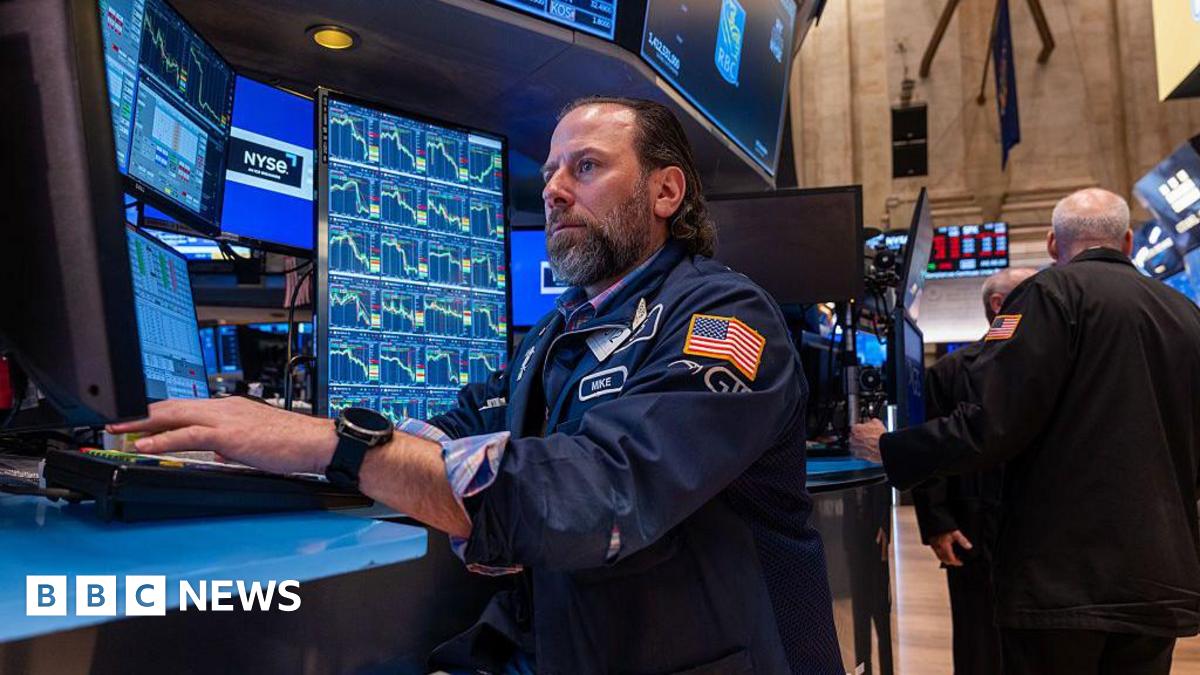
Stock market turmoil deepened on Friday, as China hit back at tariffs announced by US President Donald Trump, raising the likelihood of an extended trade war and damage to the global economy. All three major stock indexes in the US plunged more than 5%, with the S&P 500 dropping almost 6%, capping the worst week for the US stock market since 2020. In the UK, the FTSE 100 plunged almost 5% - its steepest fall in five years, while Asian markets also dropped and exchanges in Germany and France faced similar declines.
AI Summary
Main Idea: Donald Trump’s new tariff plan sent global markets sharply lower as China and the European Union prepared to respond, raising fears of a wider trade war and slower growth.
Key Points:
- US stocks fell more than 5% again, with the S&P 500, Dow and Nasdaq all posting steep losses for the week.
- China answered Trump’s tariffs with new taxes on US goods and other steps against American firms.
- The European Union said it wants talks, but is also ready to defend its interests if needed.
- Analysts and the Federal Reserve warned that higher tariffs could slow the economy, raise prices, and increase the risk of recession.
Impact on the People
Negative Impact
Trump's tariffs and China's retaliation could raise prices on imported goods, squeeze small businesses, and shake retirement and savings accounts.
Positive Impact
Some US workers in protected industries may gain bargaining power if companies bring more production home.
How did each entity affect people?
Rate how each entity in this article affected the American people.
- Primary:Chinacountry
- Primary:President Donald Trumpperson
Candidate Entities9 candidates · 5 weighted vote min · 70% decision
- ChinacountryPrimaryEvaluated
Major retaliating actor in the trade dispute, imposing counter-tariffs and export curbs.
Include 0 (0%)Ignore 0 (0%)5 to threshold - President Donald TrumppersonPrimaryEvaluated
Central actor whose tariff announcements and public comments drive the market sell-off.
Include 0 (0%)Ignore 0 (0%)5 to threshold - ApplecompanyMajorAI selected
Major public company hit hard by the sell-off because of its China-linked supply chain.
Include 0 (0%)Ignore 0 (0%)5 to threshold - European Unioninternational organizationMajorAI selected
Major trading bloc facing tariffs and weighing retaliation and negotiations.
Include 0 (0%)Ignore 0 (0%)5 to threshold - NikecompanyMajorAI selected
Major public company affected by the tariff-driven market drop and supply-chain exposure.
Include 0 (0%)Ignore 0 (0%)5 to threshold - JP MorgancompanyContextCandidate
Financial firm cited for recession assessment and investor note.
Include 0 (0%)Ignore 0 (0%)5 to threshold - JPMorgan ChasecompanyContextCandidate
Financial institution cited for recession odds and market analysis.
Include 0 (0%)Ignore 0 (0%)5 to threshold - Maroš ŠefčovičpersonContextCandidate
EU trade commissioner quoted on negotiations and the trade relationship.
Include 0 (0%)Ignore 0 (0%)5 to threshold
Comments 0
Comments here are the same thread shown when this article appears in The Pulse.
No comments on this article yet.
Sign in to comment