Supreme Court rules against Texas in suit over nuclear waste storage
Read Original Source
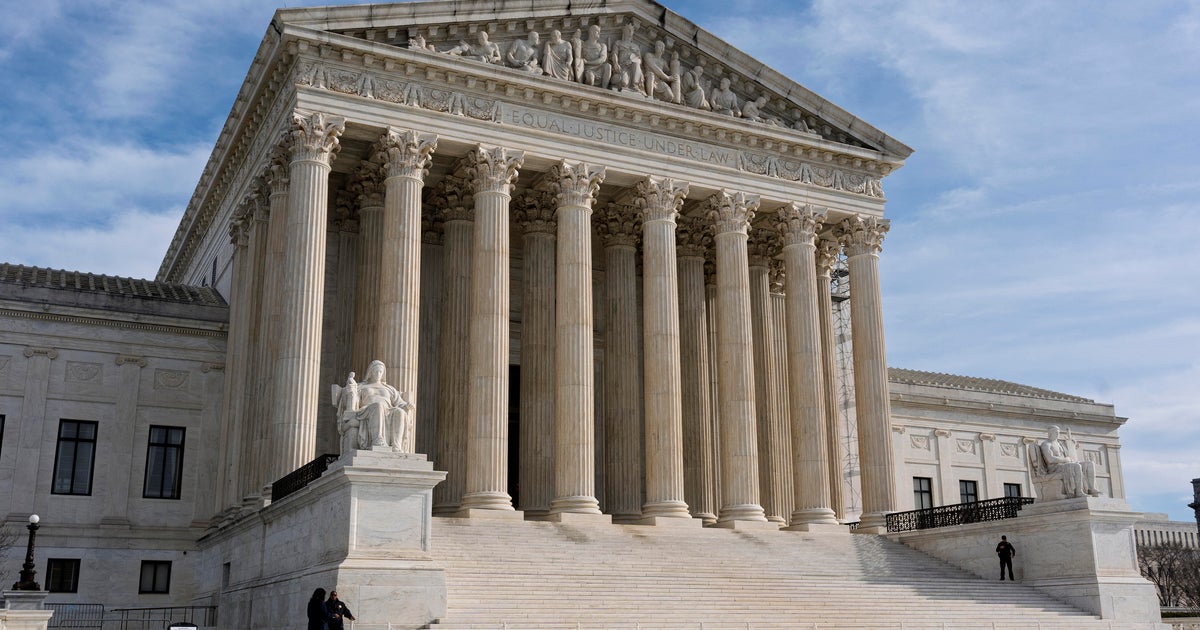
Washington — The Supreme Court on Wednesday rejected a challenge brought by Texas and a group of landowners to the Nuclear Regulatory Commission's approval of a private company's plan to temporarily store thousands of metric tons of nuclear waste at a facility in the state. Justice Brett Kavanaugh wrote in a decision for a 6-3 court in the case of NRC v. Texas that neither Texas nor a land developer were parties to the commission's licensing proceeding, and therefore are not entitled to obtain judicial review.
AI Summary
Main Idea: The Supreme Court ruled that Texas cannot challenge a federal license for a private company to store nuclear waste in the state because Texas was not part of the earlier agency proceeding.
Key Points:
- The 6-3 decision, written by Justice Brett Kavanaugh, focused on whether Texas had legal standing to seek court review.
- The court said Texas and the landowners did not properly intervene in the Nuclear Regulatory Commission process, so they could not sue.
- The justices did not decide the broader question of whether the commission can allow private offsite storage of nuclear waste.
- The ruling leaves in place a license for Interim Storage Partners to store spent nuclear fuel in Andrews County, Texas.
Impact on the People
Negative Impact
The ruling may let more nuclear waste be stored in Texas, which could worry nearby communities about safety and long-term cleanup costs.
Positive Impact
The Supreme Court decision gives regulators and companies more certainty about where spent fuel can be stored, which could help keep power plants running.
How did each entity affect people?
Rate how each entity in this article affected the American people.
- Primary:Interim Storage Partnerscompany
- Primary:Justice Brett Kavanaughperson
- Primary:Nuclear Regulatory Commissiongovernment agency or body
Candidate Entities10 candidates · 5 weighted vote min · 70% decision
- Interim Storage PartnerscompanyPrimaryEvaluated
The private company whose license to store nuclear waste is at the center of the dispute.
Include 0 (0%)Ignore 0 (0%)5 to threshold - Justice Brett KavanaughpersonPrimaryEvaluated
He wrote the majority opinion and is the named author of the decision.
Include 0 (0%)Ignore 0 (0%)5 to threshold - Nuclear Regulatory Commissiongovernment agency or bodyPrimaryEvaluated
The agency approved the nuclear waste storage license and its action is the subject of the case.
Include 0 (0%)Ignore 0 (0%)5 to threshold - Supreme Court of the United Statesgovernment agency or bodyPrimaryAI selected
The court issued the central ruling in the case and its decision drives the entire article.
Include 0 (0%)Ignore 0 (0%)5 to threshold - TexasstatePrimaryAI selected
Texas is a primary party in the lawsuit and the ruling directly concerns its challenge.
Include 0 (0%)Ignore 0 (0%)5 to threshold - Justice Clarence ThomaspersonMajorAI selected
He joined the dissent and is part of the split highlighted in the story.
Include 0 (0%)Ignore 0 (0%)5 to threshold - Justice Neil GorsuchpersonMajorAI selected
He is a named dissenter whose position is discussed in the ruling.
Include 0 (0%)Ignore 0 (0%)5 to threshold
Comments 0
Comments here are the same thread shown when this article appears in The Pulse.
No comments on this article yet.
Sign in to comment