Facebook chief rules out banning political adverts
Read Original Source
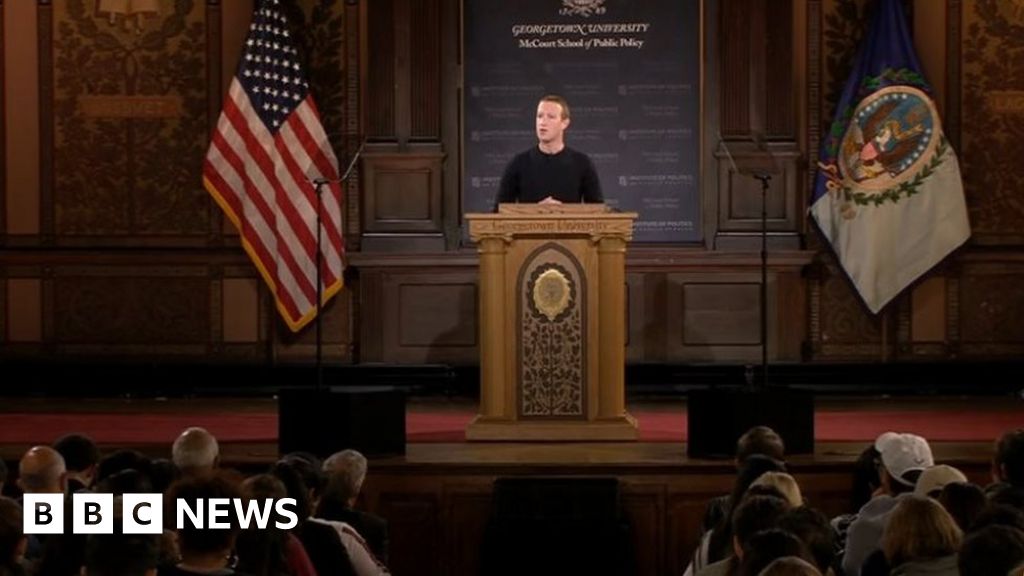
Mr Zuckerberg gave his speech to an audience of students and others at Georgetown University in Washington DC Facebook's founder Mark Zuckerberg has said he does not think it is right for a company to censor politicians or the news in a democracy. He was giving a speech, external in Washington DC following weeks of criticism over the firm's decision not to ban political adverts that contain falsehoods. He added he had considered barring all political ads on his platforms.
AI Summary
Main Idea: Mark Zuckerberg said Facebook will not ban political ads, arguing that a company should not censor politicians or the news in a democracy.
Key Points:
- Zuckerberg said Facebook should “err on the side of greater expression” and that banning all political ads could unfairly help politicians already in office.
- He said the company is still struggling with where to draw the line on false or misleading political content.
- Senator Elizabeth Warren and other critics have attacked Facebook for letting politicians run ads with false claims.
- Zuckerberg also used the speech to defend free speech, criticize TikTok’s censorship, and argue that limits on online speech could give more power to Chinese tech firms.
Impact on the People
Negative Impact
Letting Facebook carry political ads with false claims could mislead voters and weaken trust in elections.
Positive Impact
Keeping some political ads may preserve free speech and help smaller campaigns reach people without media gatekeepers.
How did each entity affect people?
Rate how each entity in this article affected the American people.
- Primary:Facebookcompany
- Primary:Mark Zuckerbergperson
- Major:Senator Elizabeth Warrenperson
Candidate Entities12 candidates · 5 weighted vote min · 70% decision
- FacebookcompanyPrimaryEvaluated
The platform making the political-advertising decision that the article is primarily about.
Include 0 (0%)Ignore 0 (0%)5 to threshold - Mark ZuckerbergpersonPrimaryEvaluated
Facebook founder and chief executive at the center of the article, whose speech and stated position on political.
Include 0 (0%)Ignore 0 (0%)5 to threshold - Senator Elizabeth WarrenpersonMajorEvaluated
Named politician directly criticizing Facebook’s policy and using an intentionally misleading ad in protest.
Include 0 (0%)Ignore 0 (0%)5 to threshold - ApplecompanyContextCandidate
Company associated with Tim Cook’s criticism of Facebook and its privacy practices.
Include 0 (0%)Ignore 0 (0%)5 to threshold - Donald TrumppersonContextCandidate
Mentioned as the target of the disputed re-election ad and in the discussion of political advertising.
Include 0 (0%)Ignore 0 (0%)5 to threshold - Joe BidenpersonContextCandidate
Democratic presidential candidate referenced through his campaign’s criticism of Facebook’s handling of misleading content.
Include 0 (0%)Ignore 0 (0%)5 to threshold - Marc BenioffpersonContextCandidate
Salesforce chief executive quoted criticizing Facebook in a notable supporting role.
Include 0 (0%)Ignore 0 (0%)5 to threshold - SalesforcecompanyContextCandidate
Company represented by Marc Benioff in the article’s criticism of Facebook.
Include 0 (0%)Ignore 0 (0%)5 to threshold
Comments 0
Comments here are the same thread shown when this article appears in The Pulse.
No comments on this article yet.
Sign in to comment