Supreme Court prepares to weigh tariffs fight in test of Trump's power
Read Original Source
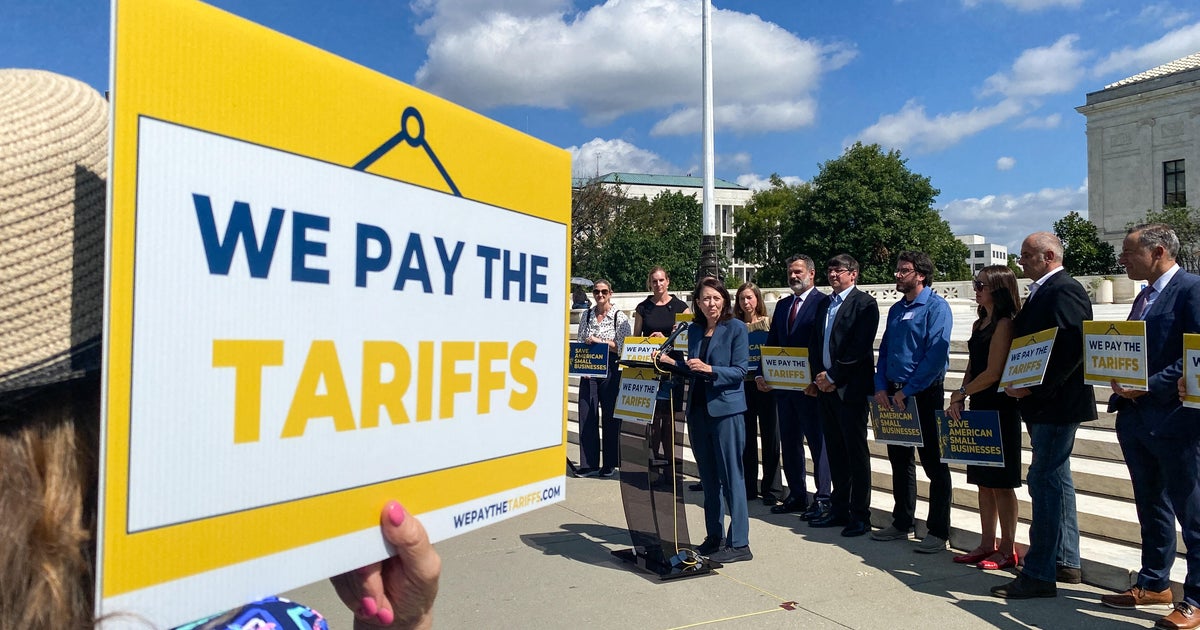
Washington — For Lindsay Hagerman, the past few months have felt tumultuous. As the co-owner of the Pennsylvania-based RainCaper, which sells art-inspired travel accessories and gifts, Hagerman has found herself questioning her pricing strategy while watching tariffs on goods imported from China see-saw from 10% to 20% to 145% — and then back down again. "Is it temporary? Is this the new normal? You're struggling with how do we price — do we change prices now? Wait?
AI Summary
Main Idea: The Supreme Court is set to decide whether President Donald Trump had the power to impose sweeping tariffs under emergency law, a case that could reshape presidential authority and affect small businesses.
Key Points:
- The court will hear arguments on whether Trump can use the International Emergency Economic Powers Act to set tariffs on imports from many countries.
- Lower courts have ruled that the law does not clearly give the president power to impose these broad tariffs.
- Small businesses say the tariffs have raised costs, hurt hiring, and forced them to change prices and supply chains.
- The Trump administration argues the tariffs are needed for national security, foreign policy, and economic leverage.
Impact on the People
Negative Impact
If the tariffs stay in place, households and small businesses could face higher prices, fewer jobs, and more uncertainty in planning and investing.
Positive Impact
If the Supreme Court limits the tariffs, consumers and businesses could get more stable prices and less risk from sudden trade costs.
How did each entity affect people?
Rate how each entity in this article affected the American people.
- Primary:President Donald Trumpperson
Candidate Entities9 candidates · 5 weighted vote min · 70% decision
- President Donald TrumppersonPrimaryEvaluated
Central figure in the tariff fight; the article focuses on his use of emergency powers and the legal.
Include 0 (0%)Ignore 0 (0%)5 to threshold - Supreme Court of the United Statesgovernment agency or bodyPrimaryAI selected
The court is the central institution preparing to hear the case and its ruling could determine the legality.
Include 0 (0%)Ignore 0 (0%)5 to threshold - ChinacountryMajorAI selected
A primary country targeted by the tariffs and central to the trade dispute.
Include 0 (0%)Ignore 0 (0%)5 to threshold - Federal Circuitgovernment agency or bodyMajorAI selected
The appellate court whose ruling against the administration is central to the legal conflict.
Include 0 (0%)Ignore 0 (0%)5 to threshold - Lindsay HagermanpersonMajorAI selected
Named small-business owner whose experience is used as a leading example of the tariff impact.
Include 0 (0%)Ignore 0 (0%)5 to threshold - RainCapercompanyMajorAI selected
Hagerman’s company is a concrete business affected by the tariffs and featured prominently in the article.
Include 0 (0%)Ignore 0 (0%)5 to threshold - D. John SauerpersonContextCandidate
Named Solicitor General making the administration’s central legal argument before the Supreme Court.
Include 0 (0%)Ignore 0 (0%)5 to threshold
Comments 0
Comments here are the same thread shown when this article appears in The Pulse.
No comments on this article yet.
Sign in to comment