Supreme Court allows Trump to enforce passport restrictions targeting transgender people
Read Original Source
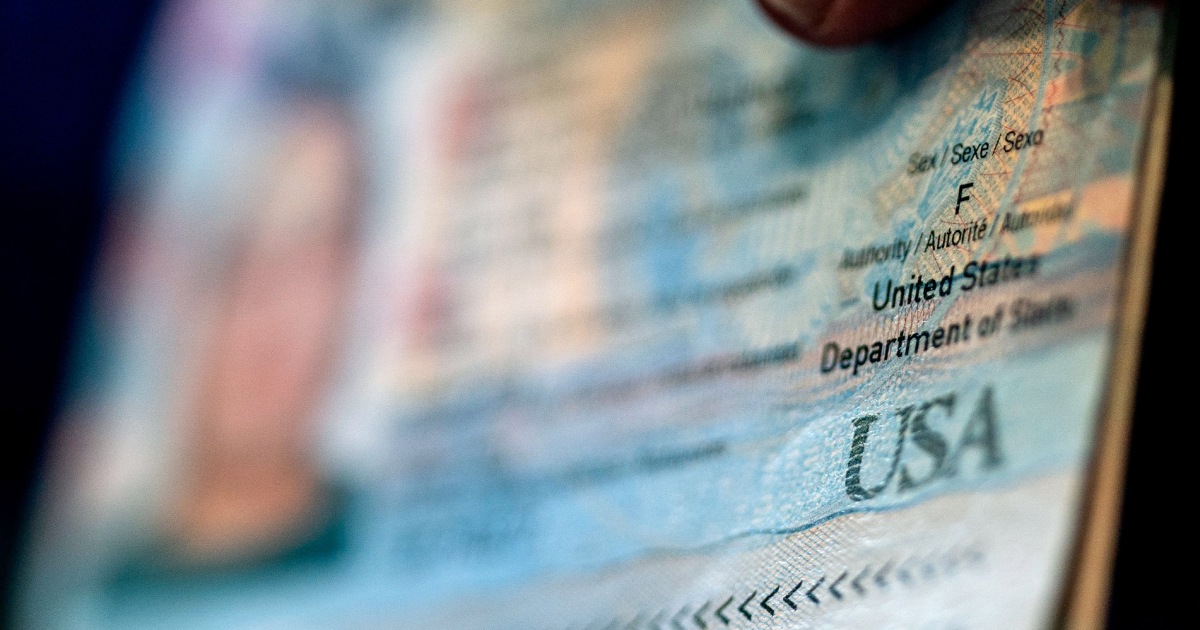
WASHINGTON — The Supreme Court on Thursday allowed the Trump administration to enforce a policy aimed at limiting transgender rights that would restrict sex designations on passports to “male” and “female” based on sex assigned at birth. Limited time: Save 25% on NBC News subscription Get exclusive reporting, live Q&As and ad-free reading.
AI Summary
Main Idea: The Supreme Court let President Donald Trump enforce a passport policy that limits sex markers to male or female based on sex assigned at birth, while the case continues.
Key Points:
- The court granted an emergency request from the Trump administration to put the policy into effect right away.
- Justice Ketanji Brown Jackson, joined by the other liberal justices, dissented and said the government had not shown it would be harmed by waiting.
- The policy rolls back Biden-era rules that allowed an “X” marker and let people choose a marker that matched their gender identity.
- The ruling is not final, but it gives Trump a temporary win in a case brought by transgender people who say the policy violates equal protection rights.
Impact on the People
Negative Impact
The ruling may make transgender, nonbinary, and intersex people face more risk and stress when they travel, and it could add new legal fights for households and agencies.
Positive Impact
The Trump administration and some voters may see the decision as clearer passport rules,.
How did each entity affect people?
Rate how each entity in this article affected the American people.
- Primary:President Donald Trumpperson
- Primary:Supreme Courtgovernment agency or body
Candidate Entities12 candidates · 5 weighted vote min · 70% decision
- President Donald TrumppersonPrimaryEvaluated
His administration’s passport policy is the main subject of the article.
Include 0 (0%)Ignore 0 (0%)5 to threshold - Supreme Courtgovernment agency or bodyPrimaryEvaluated
Central court that granted the emergency request and allowed the passport restriction policy to take effect.
Include 0 (0%)Ignore 0 (0%)5 to threshold - American Civil Liberties Unionnonprofit / NGOMajorAI selected
Legal advocacy organization representing the transgender plaintiffs challenging the policy.
Include 0 (0%)Ignore 0 (0%)5 to threshold - Ashton OrrpersonMajorAI selected
Named transgender plaintiff whose passport application is a key example in the case.
Include 0 (0%)Ignore 0 (0%)5 to threshold - Attorney General Pam BondipersonMajorAI selected
Named administration official publicly defending the policy and the Court’s decision.
Include 0 (0%)Ignore 0 (0%)5 to threshold - Justice Ketanji Brown JacksonpersonMajorAI selected
Named justice whose dissent is quoted and central to the article’s legal conflict.
Include 0 (0%)Ignore 0 (0%)5 to threshold - Secretary of State Departmentgovernment agency or bodyMajorAI selected
The agency responsible for passport issuance and the policy being enforced.
Include 0 (0%)Ignore 0 (0%)5 to threshold
Comments 0
Comments here are the same thread shown when this article appears in The Pulse.
No comments on this article yet.
Sign in to comment