Trump's global tariff to take effect at 10%, despite announcement of 15%
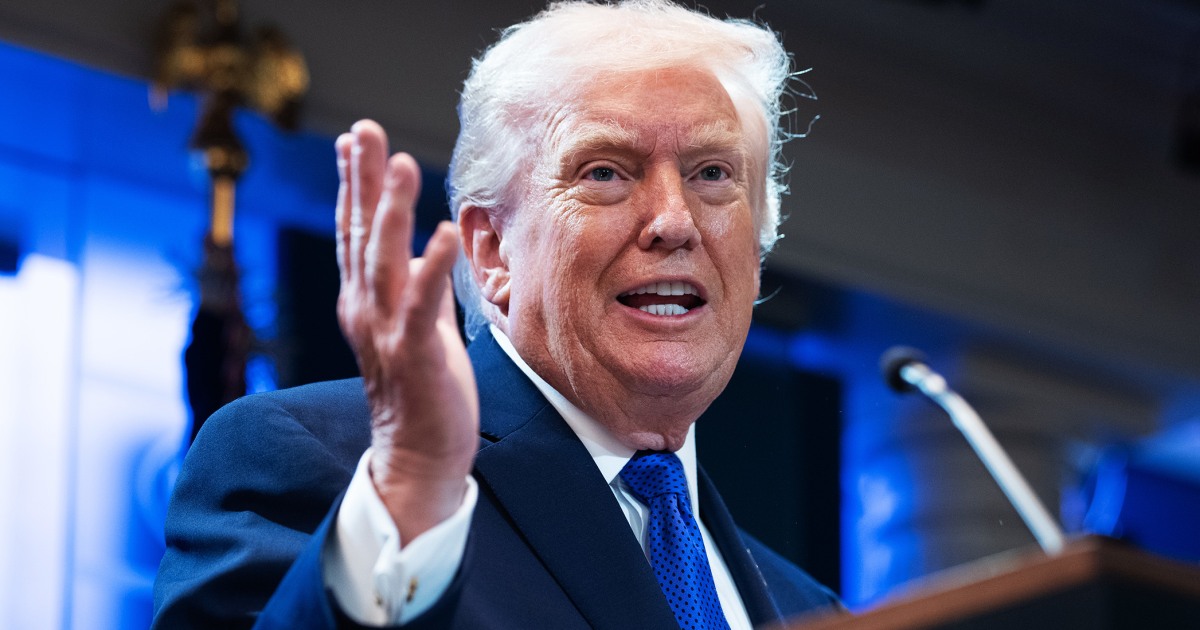
Read Original Source
President Donald Trump's reworked global tariffs began Tuesday at a rate of 10%, even though he said over the weekend that they would start at 15%. Subscribe to read this story ad-free Get unlimited access to ad-free articles and exclusive content. On Friday, after the Supreme Court struck down most of Trump's tariff agenda, he announced that he would quickly implement a 10% flat tariff for all trading partners using a different trade law.
AI Summary
Main Idea: President Donald Trump’s new global tariff started at 10% on Tuesday, even after he said it would rise to 15%.
Key Points:
- The tariff follows the Supreme Court’s ruling that struck down most of Trump’s earlier tariff plan.
- The White House said the 10% rate applies to almost every country for up to 150 days unless exempt.
- U.S. Customs and Border Protection told importers the lower rate was in effect first, and the administration may raise it to 15% later.
- The shifting tariff plan has added to uncertainty for companies, investors, and trading partners, and the European Union has paused part of a trade deal with Trump.
Impact on the People
Negative Impact
The new tariff can raise prices for imported goods, adding costs for households and small businesses and creating more uncertainty for workers and investors.
Positive Impact
The Supreme Court’s ruling may limit how far the administration can push tariffs, which could restrain bigger price hikes later.
How did each entity affect people?
Rate how each entity in this article affected the American people.
- Primary:President Donald Trumpperson
- Major:European Unioninternational organization
Candidate Entities9 candidates · 5 weighted vote min · 70% decision
- President Donald TrumppersonPrimaryEvaluated
Central actor whose tariff decision and conflicting announcement drive the story.
Include 0 (0%)Ignore 0 (0%)5 to threshold - European Unioninternational organizationMajorEvaluated
Its response to the tariff uncertainty, including freezing a trade deal, is a major part of the article.
Include 0 (0%)Ignore 0 (0%)5 to threshold - Supreme Court of the United Statesgovernment agency or bodyMajorAI selected
Its ruling against most of Trump’s tariff agenda is the key trigger for the policy shift.
Include 0 (0%)Ignore 0 (0%)5 to threshold - United States Customs and Border Protectiongovernment agency or bodyMajorAI selected
Issued the memo that set the initial 10% tariff rate and implementation timing.
Include 0 (0%)Ignore 0 (0%)5 to threshold - Bernd LangepersonContextCandidate
Named European Union lawmaker quoted reacting to the tariff situation, but not the main focus.
Include 0 (0%)Ignore 0 (0%)5 to threshold - ChinacountryContextCandidate
Named trading partner considering how to respond to the new tariff regime.
Include 0 (0%)Ignore 0 (0%)5 to threshold - IndiacountryMinorCandidate
Mentioned as a trading partner weighing possible action in response to the tariffs.
Include 0 (0%)Ignore 0 (0%)5 to threshold
Comments 0
Comments here are the same thread shown when this article appears in The Pulse.
No comments on this article yet.
Sign in to comment