Democratic senators file war powers resolution to try to restrain Trump on Cuba
Read Original Source
Washington — Senate Democrats have filed legislation that would prevent the U.S. from attacking Cuba without congressional approval as they seek to force a vote on President Trump's stated goal of a "takeover" of the Caribbean country. Democrats have repeatedly used war powers resolutions to force debate on Mr. Trump's foreign policy moves, though Republicans have so far mostly backed the president. The resolution filed Thursday by Democratic Sens.
AI Summary
Main Idea: Senate Democrats filed a war powers resolution to block President Donald Trump from attacking Cuba without Congress first approving it.
Key Points:
- The measure would require Trump to pull U.S. forces out of any hostilities with Cuba unless Congress authorizes action.
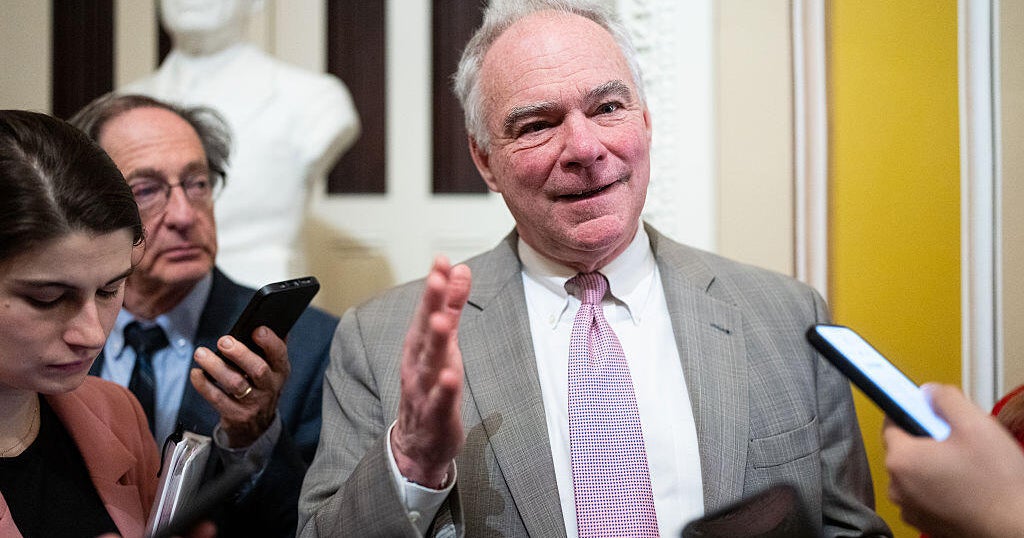
- Sen. Tim Kaine said the resolution is meant to uphold Congress’s power to declare war.
- Trump said he was open to a “takeover” of Cuba and said talks with Cuban leaders were tied to broader U.S. foreign policy goals.
- Democrats are using war powers resolutions to force debate on Trump’s military actions, but they have not yet won passage.
Impact on the People
Negative Impact
A fight over military action in Cuba could raise tensions, add costs for taxpayers, and unsettle markets if the US faces a new foreign crisis.
Positive Impact
Tim Kaine’s war powers vote could limit unilateral action and give voters and Congress more control over war decisions.
How did each entity affect people?
Rate how each entity in this article affected the American people.
- Primary:Cubacountry
- Primary:President Donald Trumpperson
Candidate Entities10 candidates · 5 weighted vote min · 70% decision
- CubacountryPrimaryEvaluated
The article’s main foreign policy focus and the country the resolution seeks to protect from attack.
Include 0 (0%)Ignore 0 (0%)5 to threshold - President Donald TrumppersonPrimaryEvaluated
Central figure in the article; his stated goal of a Cuba “takeover” and use of military action drive.
Include 0 (0%)Ignore 0 (0%)5 to threshold - President Miguel Diaz-CanelpersonMajorAI selected
Cuba’s leader responding publicly to the reported U.S.-Cuba conversations, making him a major actor.
Include 0 (0%)Ignore 0 (0%)5 to threshold - Secretary of State Marco RubiopersonMajorAI selected
Senior administration official directly involved in the Cuba talks and described as negotiating with Cuba’s leadership.
Include 0 (0%)Ignore 0 (0%)5 to threshold - Senate Democratspolitical organizationMajorAI selected
Collective political bloc behind the war powers resolution and the push for a vote.
Include 0 (0%)Ignore 0 (0%)5 to threshold - Senator Adam SchiffpersonMajorAI selected
Named Democratic senator joining the resolution effort to restrain the president.
Include 0 (0%)Ignore 0 (0%)5 to threshold - Senator Ruben GallegopersonMajorAI selected
Named Democratic senator filing the resolution and publicly criticizing Trump’s foreign policy.
Include 0 (0%)Ignore 0 (0%)5 to threshold
Comments 0
Comments here are the same thread shown when this article appears in The Pulse.
No comments on this article yet.
Sign in to comment