Supreme Court turns away parental rights case over child's gender transition
Read Original Source
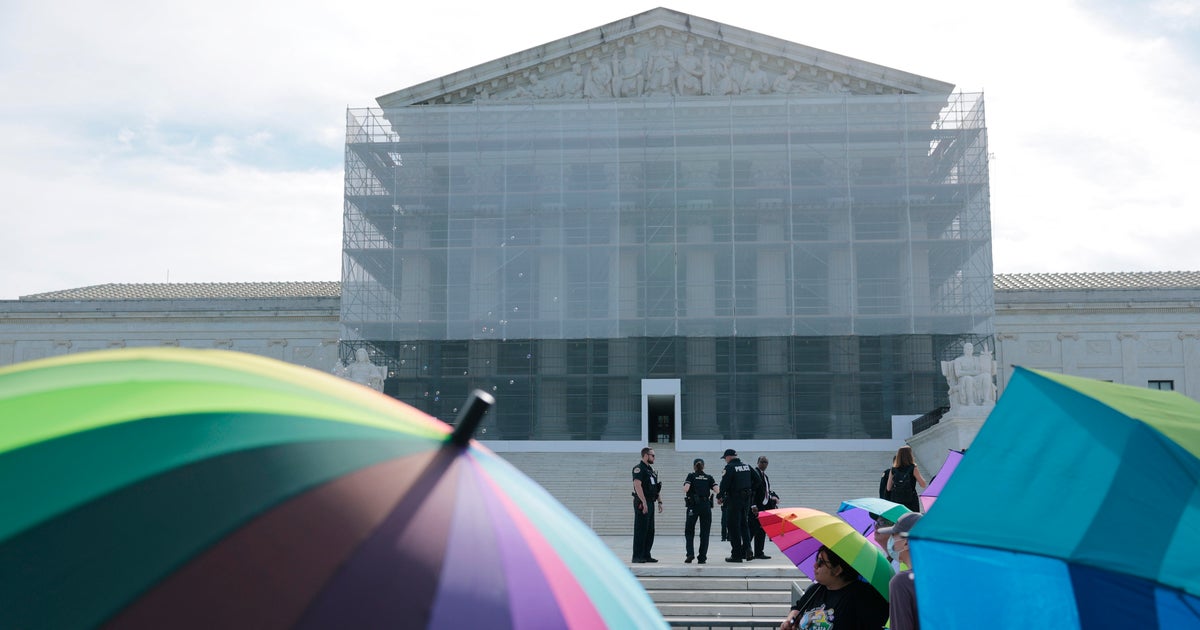
Washington — The Supreme Court on Monday turned away a legal battle testing whether a public school violates parents' rights when it encourages their child's social gender transition without their knowledge or consent. In declining the appeal from Massachusetts parents who sued their child's school district, the high court left untouched a lower court ruling that rejected their claim that their rights had been violated.
AI Summary
Main Idea: The Supreme Court declined to hear a parental rights case from Massachusetts over a public school’s handling of a child’s gender transition, leaving a lower court ruling in place.
Key Points:
- The case was brought by Stephen Foote and Marissa Silvestri, who said their child’s school encouraged social transition without their knowledge or consent.
- The parents argued that the school violated their right to direct their child’s upbringing, education, and mental health care.
- The 1st Circuit ruled against the parents, saying public schools have broad authority over school decisions and that parents cannot use the Constitution to demand a preferred school experience.
- The justices did not explain their refusal to take the case, but the issue may return soon because a similar Florida case is still pending and other related disputes are moving through the courts.
Impact on the People
Negative Impact
The ruling leaves schools and families with no clear national rule, so parents, students, and districts may face more lawsuits and confusion over privacy and parental notice.
Positive Impact
The Court’s silence may let states and schools keep local policies that protect some transgender students from being outed at home.
How did each entity affect people?
Rate how each entity in this article affected the American people.
No entity suggestions or linked entities saved yet.
Candidate Entities10 candidates · 5 weighted vote min · 70% decision
- Ludlow School Committeegovernment agency or bodyPrimaryAI selected
Local school board accused in the lawsuit and directly involved in the challenged school policy.
Include 0 (0%)Ignore 0 (0%)5 to threshold - Supreme Court of the United Statesgovernment agency or bodyPrimaryAI selected
Central actor that declined to hear the appeal and left the lower-court ruling in place.
Include 0 (0%)Ignore 0 (0%)5 to threshold - Alliance Defending Freedomnonprofit / NGOMajorAI selected
Conservative legal organization representing the parents and arguing the constitutional issue.
Include 0 (0%)Ignore 0 (0%)5 to threshold - Ludlow School Districtgovernment agency or bodyMajorAI selected
Public school system at the center of the parents’ allegations and the school’s response.
Include 0 (0%)Ignore 0 (0%)5 to threshold - Marissa SilvestripersonMajorAI selected
Named parent plaintiff whose case against the school district is a major focus.
Include 0 (0%)Ignore 0 (0%)5 to threshold - Stephen FootepersonMajorAI selected
Named parent plaintiff whose case against the school district is a major focus.
Include 0 (0%)Ignore 0 (0%)5 to threshold - U.S. Court of Appeals for the 1st Circuitgovernment agency or bodyMajorAI selected
Appellate court whose ruling was left untouched by the Supreme Court.
Include 0 (0%)Ignore 0 (0%)5 to threshold
Comments 0
Comments here are the same thread shown when this article appears in The Pulse.
No comments on this article yet.
Sign in to comment