Supreme Court to weigh Trump's bid to end deportation shield for Haitians, Syrians
Read Original Source
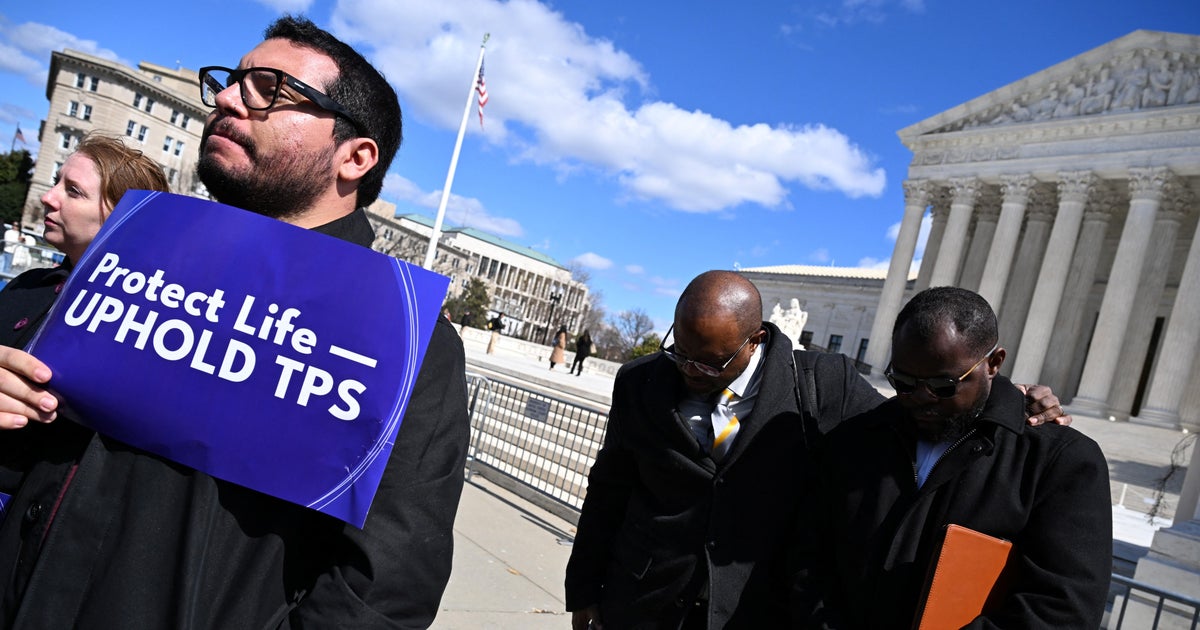
Follow updates from Wednesday's Supreme Court arguments here. Washington — Dahlia Doe felt as though her world was shaken. A Syrian national who came to the U.S. more than a decade ago for college, Dahlia, a pseudonym, has received legal protections through Temporary Protected Status, a program that provides relief from deportation to people from certain countries beset by conflict, natural disasters or other extraordinary circumstances.
AI Summary
Main Idea: The Supreme Court is weighing whether the Department of Homeland Security, under Kristi Noem, can end deportation protections for thousands of people from Syria and Haiti.
Key Points:
- The case centers on Temporary Protected Status, a program that lets people from certain countries live and work in the U.S. when it is unsafe to return home.
- DHS moved to end TPS for more than 6,000 Syrians and 350,000 Haitians, giving them about 60 days to leave unless the courts stepped in.
- Lower courts paused the changes, saying the government may have acted with political bias and did not properly follow the law.
- The Trump administration says courts cannot second-guess TPS decisions and that the secretary acted within her authority for national security and public safety reasons.
Impact on the People
Negative Impact
Ending TPS could force thousands of workers and families out of lawful US jobs and homes, hurting local communities and businesses.
Positive Impact
A Supreme Court ruling for DHS could give the government more control over deportation policy and may appeal to voters worried about border and public safety.
How did each entity affect people?
Rate how each entity in this article affected the American people.
- Primary:Department of Homeland Securitygovernment agency or body
- Primary:
Candidate Entities12 candidates · 5 weighted vote min · 70% decision
- Department of Homeland Securitygovernment agency or bodyPrimaryEvaluated
The agency moved to end Temporary Protected Status for Syrians and Haitians, making its action a core part.
Include 0 (0%)Ignore 0 (0%)5 to threshold - Representative Kristi NoempersonPrimaryEvaluated
As Homeland Security secretary, she is the named official who carried out the TPS termination decisions discussed in.
Include 0 (0%)Ignore 0 (0%)5 to threshold - President Donald TrumppersonPrimaryAI selected
His administration’s TPS rollback and related positions are central to the article and the court case.
Include 0 (0%)Ignore 0 (0%)5 to threshold - Supreme Courtgovernment agency or bodyPrimaryAI selected
The court is the central decision-maker in the case and is the main institutional focus of the article.
Include 0 (0%)Ignore 0 (0%)5 to threshold - HaiticountryMajorAI selected
Haiti is one of the two countries whose TPS protections are at issue in the Supreme Court case.
Include 0 (0%)Ignore 0 (0%)5 to threshold - SyriacountryMajorAI selected
Syria is the other country whose TPS protections are at issue in the Supreme Court case.
Include 0 (0%)Ignore 0 (0%)5 to threshold - United States District Court for the District of Columbiagovernment agency or bodyMajorAI selected
Judge Ana Reyes’s ruling in the Haiti case is central to the article’s discussion of the legal challenge.
Include 0 (0%)Ignore 0 (0%)5 to threshold
Comments 0
Comments here are the same thread shown when this article appears in The Pulse.
No comments on this article yet.
Sign in to comment