Netanyahu wants Israel "to draw down to zero the American financial support"
Read Original Source
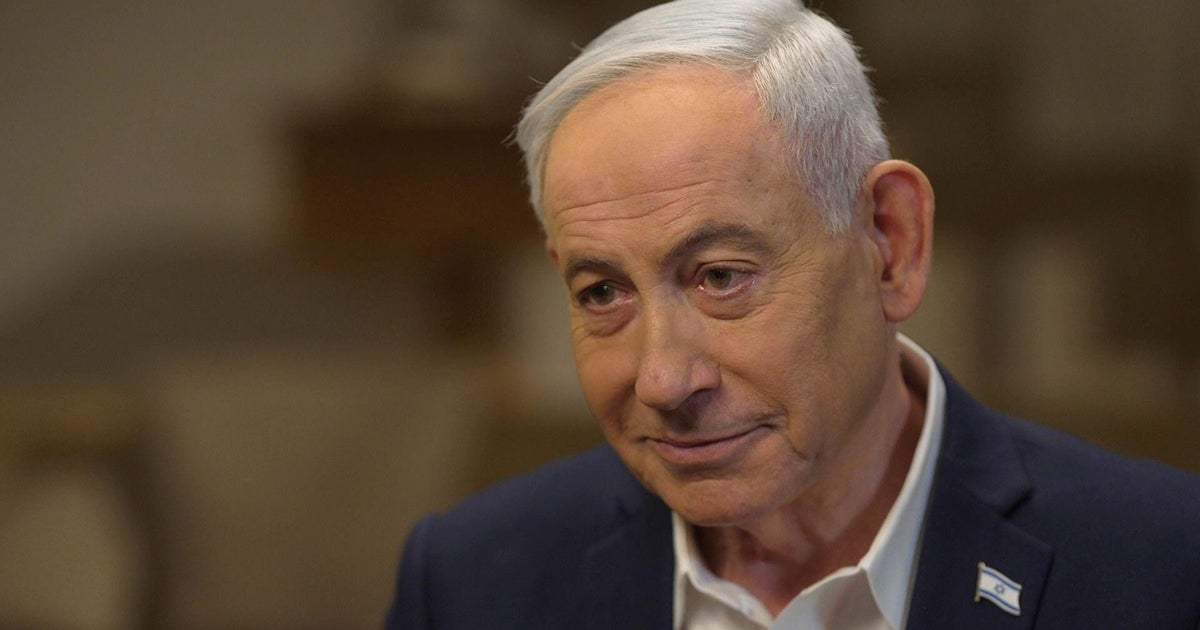
The ceasefire between the U.S. and Iran was tested again Sunday by suspected Iranian drone strikes in the Persian Gulf, another spurt of hostilities in a war that has now spread from the Gulf to Lebanon, further complicating White House efforts to close a deal that would reopen the Strait of Hormuz and stabilize energy prices. With so much at stake — and as the war stretches into its 11th week — our CBS News colleague Major Garrett spoke Saturday with Israeli Prime Minister Benjamin Netanyahu.
AI Summary
Main Idea: Benjamin Netanyahu said Israel wants to keep fighting Iran’s threats while also cutting U.S. military financial support to zero over time.
Key Points:
- Netanyahu said the war with Iran is not over because nuclear material, enrichment sites, missiles, and proxy groups still need to be dealt with.
- He said the conflict with Hezbollah could continue even if Iran is weakened, and he does not want a ceasefire there just because one happens with Iran.
- Netanyahu said he believes the collapse or weakening of Iran’s regime could also end the threat from Hezbollah, Hamas, and the Houthis.
- He said Israel should phase out the annual $3.8 billion in U.S. military aid over the next decade and rely less on American financial support.
Impact on the People
Negative Impact
More fighting in Iran and Lebanon could keep energy prices volatile and raise risks for US consumers, taxpayers, and businesses.
Positive Impact
Netanyahu said Israel wants to cut US military aid over the next decade, which could lower long-term US spending.
How did each entity affect people?
Rate how each entity in this article affected the American people.
- Major:Hezbollahpolitical organization
Candidate Entities5 candidates · 5 weighted vote min · 70% decision
- Hezbollahpolitical organizationMajorEvaluated
Major Iranian-backed proxy and second-front combatant discussed as a continuing target in the conflict.
Include 0 (0%)Ignore 0 (0%)5 to threshold - Prime Minister Benjamin NetanyahupersonPrimaryAI selected
Central subject of the interview and the article’s main source of claims about Israel, Iran, Hezbollah, and U.S.
Include 0 (0%)Ignore 0 (0%)5 to threshold - President Donald TrumppersonMajorAI selected
Frequently referenced in Netanyahu’s account of U.S.-Israeli coordination and the cited position on Iran.
Include 0 (0%)Ignore 0 (0%)5 to threshold - Hamaspolitical organizationContextCandidate
Mentioned as part of Iran’s proxy network and possible fallout from regime weakening.
Include 0 (0%)Ignore 0 (0%)5 to threshold - The Houthispolitical organizationContextCandidate
Mentioned as another Iranian-linked proxy potentially affected by events in Iran.
Include 0 (0%)Ignore 0 (0%)5 to threshold
Comments 0
Comments here are the same thread shown when this article appears in The Pulse.
No comments on this article yet.
Sign in to comment