The TikTok ban heads to the Supreme Court tomorrow. Here's what to know.
Read Original Source
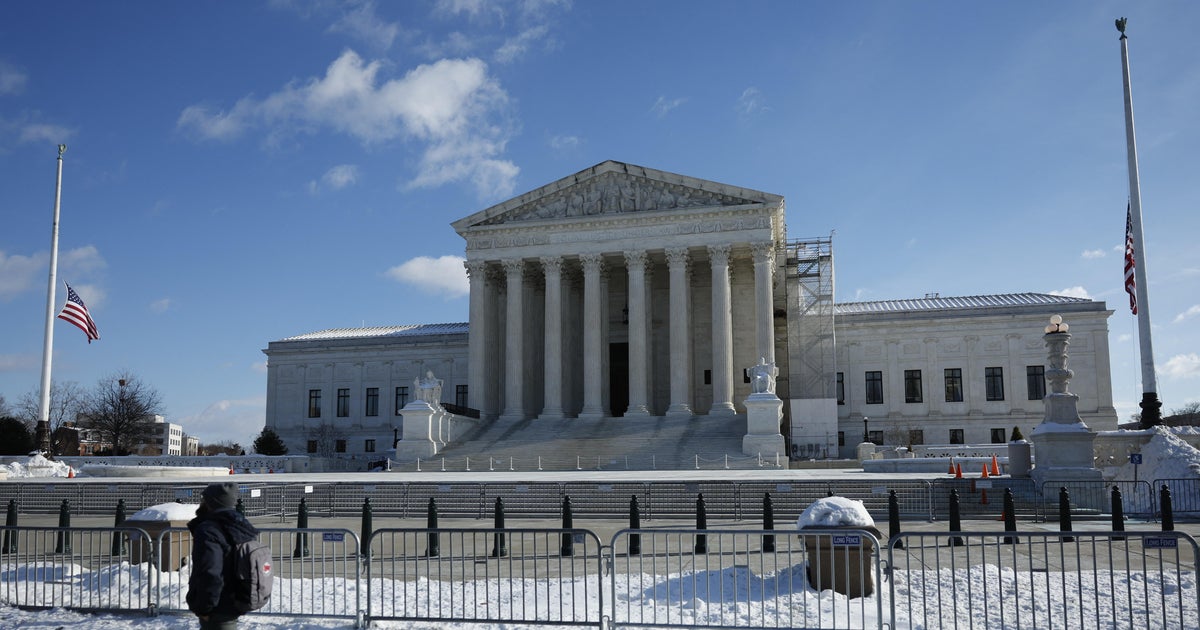
Find updates from the TikTok Supreme Court arguments here. Washington — The Supreme Court is set to hear arguments Friday morning on whether to overturn or delay a law that could lead to a ban on TikTok in the U.S. in the coming days. The law is set to take effect on Jan. 19, nine months after it swiftly passed Congress with bipartisan support and was signed into law by President Biden.
AI Summary
Main Idea: The Supreme Court is set to decide whether a law forcing TikTok to cut ties with ByteDance or face a U.S. ban violates the First Amendment.
Key Points:
- The law takes effect on Jan. 19 and would block app stores and web-hosting services from supporting TikTok unless it is sold away from ByteDance.
- The government says TikTok poses national security risks because of the data it collects and possible Chinese government influence.
- TikTok says a ban would silence millions of American users and that a divestiture from ByteDance is not realistically possible.
- The case comes as Donald Trump, who takes office after the law’s deadline, has asked for a delay and says he wants to solve the dispute through political means.
Impact on the People
Negative Impact
A TikTok ban could cut off updates and downloads for millions of US users, and it may hurt creators and small businesses that rely on the app to reach customers.
Positive Impact
Supporters say the law could lower national security risks by limiting how ByteDance handles American user data.
How did each entity affect people?
Rate how each entity in this article affected the American people.
Candidate Entities11 candidates · 5 weighted vote min · 70% decision
- TikTokcompanyPrimaryEvaluated
Primary company at the center of the potential ban and the constitutional challenge.
Include 0 (0%)Ignore 0 (0%)5 to threshold - ByteDancecompanyMajorEvaluated
TikTok’s parent company and the required divestiture target in the law.
Include 0 (0%)Ignore 0 (0%)5 to threshold - Supreme Court of the United Statesgovernment agency or bodyPrimaryAI selected
Central body hearing arguments on whether to uphold or overturn the TikTok-related law.
Include 0 (0%)Ignore 0 (0%)5 to threshold - Congressgovernment agency or bodyMajorAI selected
Passed the law that triggered the Supreme Court case and potential ban.
Include 0 (0%)Ignore 0 (0%)5 to threshold - President BidenpersonMajorAI selected
Named president who signed the law and is part of the implementation timeline.
Include 0 (0%)Ignore 0 (0%)5 to threshold - United States Department of Justicegovernment agency or bodyMajorAI selected
Represented the government’s arguments to the Supreme Court defending the law.
Include 0 (0%)Ignore 0 (0%)5 to threshold - ApplecompanyContextCandidate
Named third-party service provider affected by the law’s app-store distribution restrictions.
Include 0 (0%)Ignore 0 (0%)5 to threshold
Comments 0
Comments here are the same thread shown when this article appears in The Pulse.
No comments on this article yet.
Sign in to comment