Federal judge, prosecutors battle over Oath Keepers' access to Capitol
Read Original Source
The federal judge who presided over the seditious conspiracy trial of far-right Oath Keepers founder Stewart Rhodes is locked in a battle with Washington, D.C.'s new interim top federal prosecutor over whether Rhodes and his co-defendants should be allowed into Washington, D.C., and the U.S. Capitol following President Trump's commutation of their sentences.
AI Summary
Main Idea: Judge Amit Mehta is fighting with federal prosecutors over whether Stewart Rhodes and other Oath Keepers can enter Washington, D.C., and the Capitol after President Donald Trump commuted their sentences.
Key Points:
- Mehta ordered Rhodes and several co-defendants to stay out of Washington, D.C., and the Capitol unless the court gives permission.
- Trump’s clemency left their cases open in a way that could still allow court oversight, unlike a full pardon.
- Acting U.S. Attorney Edward Martin argued the defendants are no longer on supervised release and the judge cannot change that.
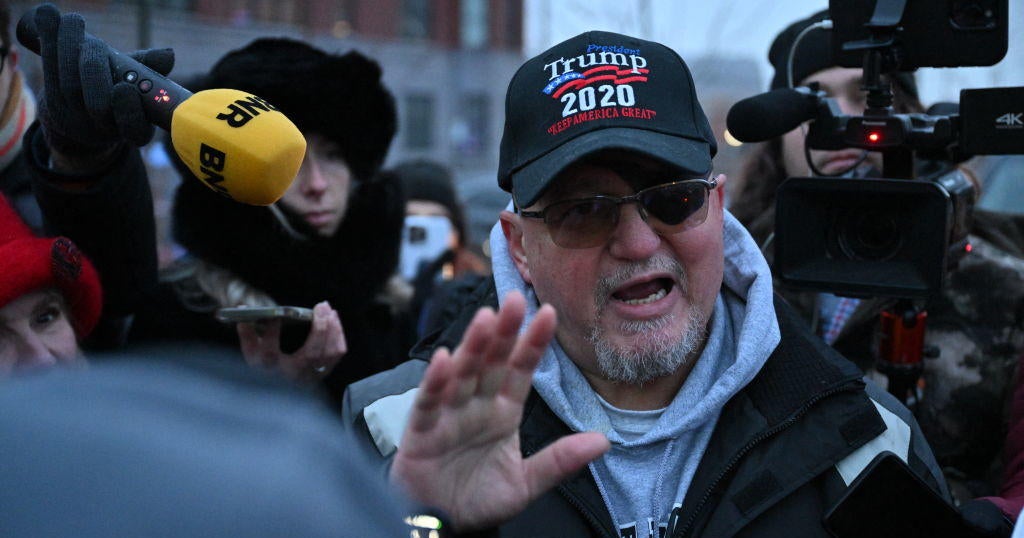
- Rhodes and some of the others later went to Capitol Hill, highlighting the dispute over what the commutations allow.
Impact on the People
Negative Impact
The fight over Oath Keepers' access to Washington and the Capitol may deepen public anger and trust problems around Jan. 6 And the justice system.
Positive Impact
No clear positive impact identified.
How did each entity affect people?
Rate how each entity in this article affected the American people.
- Primary:Judge Amit Mehtaperson
- Primary:President Donald Trumpperson
- Primary:Stewart Rhodesperson
Candidate Entities12 candidates · 5 weighted vote min · 70% decision
- Judge Amit MehtapersonPrimaryEvaluated
Federal judge whose order on access to Washington, D.C. and the U.S. Capitol is central to the article.
Include 0 (0%)Ignore 0 (0%)5 to threshold - President Donald TrumppersonPrimaryEvaluated
His commutations and pardons are a key trigger for the dispute and the story’s main development.
Include 0 (0%)Ignore 0 (0%)5 to threshold - Stewart RhodespersonPrimaryEvaluated
Oath Keepers founder at the center of the commutation dispute and Capitol-access question.
Include 0 (0%)Ignore 0 (0%)5 to threshold - David MoerchelpersonMajorAI selected
Named co-defendant directly affected by the court order and commutation.
Include 0 (0%)Ignore 0 (0%)5 to threshold - Edward MartinpersonMajorAI selected
Washington, D.C. acting U.S. attorney who directly pushed back against the judge’s order.
Include 0 (0%)Ignore 0 (0%)5 to threshold - Edward VallejopersonMajorAI selected
Named co-defendant directly affected by the court order and commutation.
Include 0 (0%)Ignore 0 (0%)5 to threshold - Jessica WatkinspersonMajorAI selected
Named co-defendant directly affected by the court order and commutation.
Include 0 (0%)Ignore 0 (0%)5 to threshold - Joseph HacketpersonMajorAI selected
Named co-defendant directly affected by the court order and commutation.
Include 0 (0%)Ignore 0 (0%)5 to threshold
Comments 0
Comments here are the same thread shown when this article appears in The Pulse.
No comments on this article yet.
Sign in to comment