As retaliatory tariffs mount, recyclers worry what goes around, comes around
Read Original Source
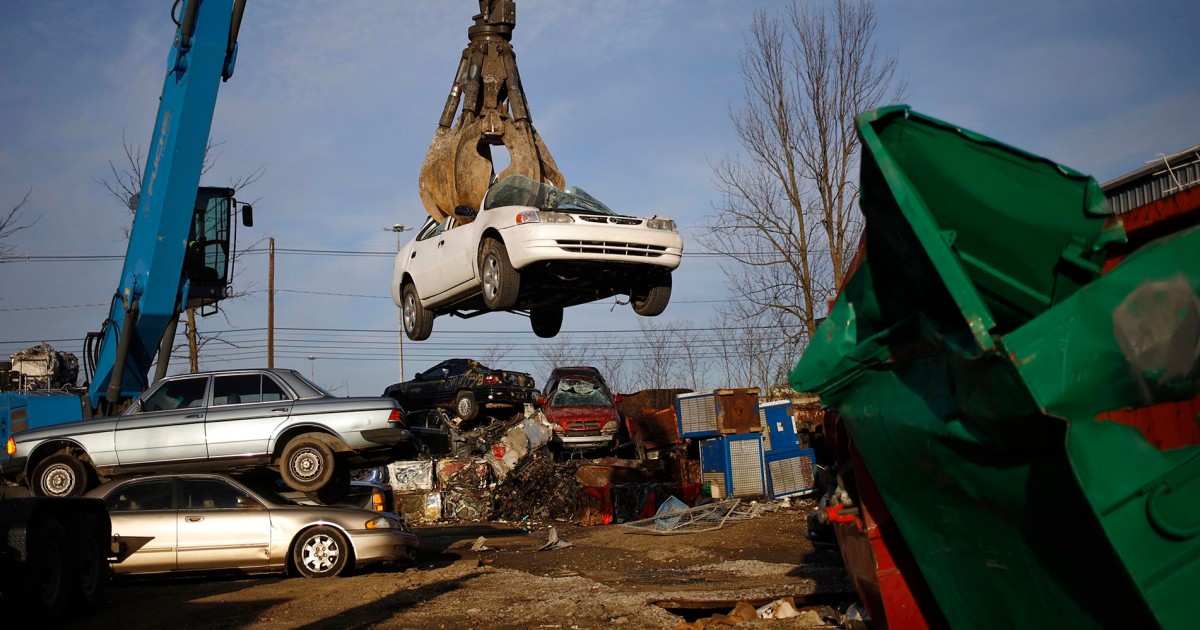
Andrew Lincoln often visits schools to teach kids to reduce waste in their daily lives. Limited time: Save 25% on NBC News subscription Get exclusive reporting, live Q&As and ad-free reading. “It’s not anything new,” said Lincoln, who owns Lincoln Recycling in Erie, Pennsylvania. “We talk about the three Rs” — reduce, reuse, recycle. But these days, telling the full story would require Lincoln to add a few more Rs, like “retaliatory tariffs” and “reliance on foreign imports.
AI Summary
Main Idea: President Donald Trump’s new and retaliatory tariffs are creating uncertainty for Lincoln Recycling and the wider U.S. recycling market, even as they may briefly raise demand for domestic metals.
Key Points:
- Trump’s 25% tariffs on steel and aluminum have triggered countertariffs from other countries, with more trade moves expected.
- Lincoln Recycling’s owner says higher domestic metal prices could help recyclers at first, but sharp swings could quickly hurt them.
- Recycling groups warn that retaliation could cut off export markets for recycled steel and aluminum, which are a major part of the business.
- Industry groups say trade with Canada and Mexico is especially important because North American recycling and metal supply chains are closely linked.
Impact on the People
Negative Impact
Tariffs can raise prices and disrupt scrap metal trade, which may hurt recyclers, workers, and consumers if markets become less stable.
Positive Impact
Domestic recyclers could gain short-term demand if foreign metal imports become more expensive.
How did each entity affect people?
Rate how each entity in this article affected the American people.
- Primary:President Donald Trumpperson
- Major:Lincoln Recyclingcompany
Candidate Entities9 candidates · 5 weighted vote min · 70% decision
- President Donald TrumppersonPrimaryEvaluated
Central political actor whose tariff actions and upcoming announcement drive the entire article.
Include 0 (0%)Ignore 0 (0%)5 to threshold - Lincoln RecyclingcompanyMajorEvaluated
The Erie recycling company at the center of the article’s business impact discussion.
Include 0 (0%)Ignore 0 (0%)5 to threshold - Andrew LincolnpersonMajorAI selected
Recycling business owner whose comments and business outlook are a major focus.
Include 0 (0%)Ignore 0 (0%)5 to threshold - Adam ShafferpersonContextCandidate
Recycled Materials Association vice president quoted on North American trade flows.
Include 0 (0%)Ignore 0 (0%)5 to threshold - Aluminum Associationunion / trade associationContextCandidate
Trade group quoted on tariff impacts and industry exemptions.
Include 0 (0%)Ignore 0 (0%)5 to threshold - Charles JohnsonpersonContextCandidate
CEO of the Aluminum Association quoted on the policy and industry effects.
Include 0 (0%)Ignore 0 (0%)5 to threshold - Michael E. HoffmanpersonContextCandidate
CEO of the National Waste and Recycling Association quoted on the industry’s trade model.
Include 0 (0%)Ignore 0 (0%)5 to threshold - National Waste and Recycling Associationunion / trade associationContextCandidate
Industry association cited on cross-border recycling trade and market structure.
Include 0 (0%)Ignore 0 (0%)5 to threshold
Comments 0
Comments here are the same thread shown when this article appears in The Pulse.
No comments on this article yet.
Sign in to comment