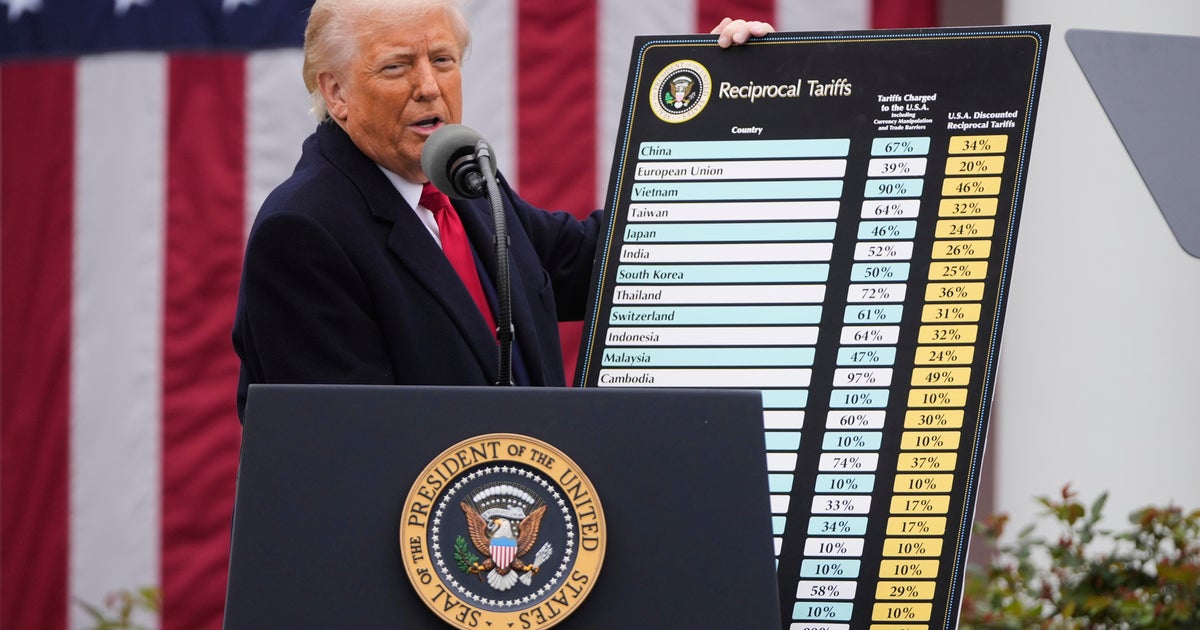
See the full list of reciprocal tariffs by country from Trump's chart
Read Original Source
A global trade war is brewing as the U.S. imposes tariffs on a growing list of countries, heightening concerns about economic growth and roiling stock markets around the world. President Trump on April 2 announced so-called reciprocal tariffs on imports from about 90 nations that are above a 10% across-the-board tax applied to all imports to the U.S. Describing the announcement as "Liberation Day," the president said the new taxes are needed to erase a trade deficit between the U.S.
AI Summary
Main Idea: President Donald Trump announced new reciprocal tariffs on imports from many countries, then paused most of them for 90 days while sharply raising tariffs on China.
Key Points:
- The plan began with a 10% tariff on all imports and higher country-specific rates for about 90 nations.
- Trump said the tariffs were meant to close trade gaps and push more manufacturing into the U.S.
- After markets reacted badly, he paused most reciprocal tariffs and kept the rate at 10% for nearly all countries except China.
- The European Union and China both announced retaliatory steps, adding to fears of a wider trade war.
Impact on the People
Negative Impact
Tariffs can raise prices for imported goods, and US households and small businesses may face higher costs if trade fights slow growth or trigger layoffs.
Positive Impact
A brief tariff pause may ease market swings for workers and investors, and it could give US firms time to adjust supply chains.
How did each entity affect people?
Rate how each entity in this article affected the American people.
- Primary:President Donald Trumpperson
- Major:European Unioninternational organization
Candidate Entities8 candidates · 5 weighted vote min · 70% decision
- President Donald TrumppersonPrimaryEvaluated
Central actor who announced, adjusted, and defended the reciprocal tariff plan.
Include 0 (0%)Ignore 0 (0%)5 to threshold - European Unioninternational organizationMajorEvaluated
Major trade counterpart named in the tariff dispute and retaliatory measures.
Include 0 (0%)Ignore 0 (0%)5 to threshold - AustraliacountryContextCandidate
Named as a country subject to the baseline tariff rate.
Include 0 (0%)Ignore 0 (0%)5 to threshold - CambodiacountryContextCandidate
Named as a country facing one of the highest tariff rates before the pause.
Include 0 (0%)Ignore 0 (0%)5 to threshold - VietnamcountryContextCandidate
Named as a country facing a high tariff rate before the pause.
Include 0 (0%)Ignore 0 (0%)5 to threshold - Capital EconomicscompanyMinorCandidate
Cited for analyst commentary on the escalating trade conflict.
Include 0 (0%)Ignore 0 (0%)5 to threshold - Moodys AnalyticscompanyMinorCandidate
Cited as the firm whose chief economist warned about recession risks.
Include 0 (0%)Ignore 0 (0%)5 to threshold - Morgan StanleycompanyMinorCandidate
Cited as the employer of a market strategist quoted reacting to the tariff pause.
Include 0 (0%)Ignore 0 (0%)5 to threshold
Comments 0
Comments here are the same thread shown when this article appears in The Pulse.
No comments on this article yet.
Sign in to comment