How were Donald Trump's tariffs calculated?
Read Original Source
US President Donald Trump has imposed a 10% tariff on goods from most countries being imported into the US, with even higher rates for what he calls the "worst offenders". But how exactly were these tariffs - essentially taxes on imports - worked out? BBC Verify has been looking at the calculations behind the numbers.
AI Summary
Main Idea: Donald Trump’s new tariffs were worked out using a simple formula based on the US goods trade deficit with each country, not on a full measure of existing foreign tariffs.
Key Points:
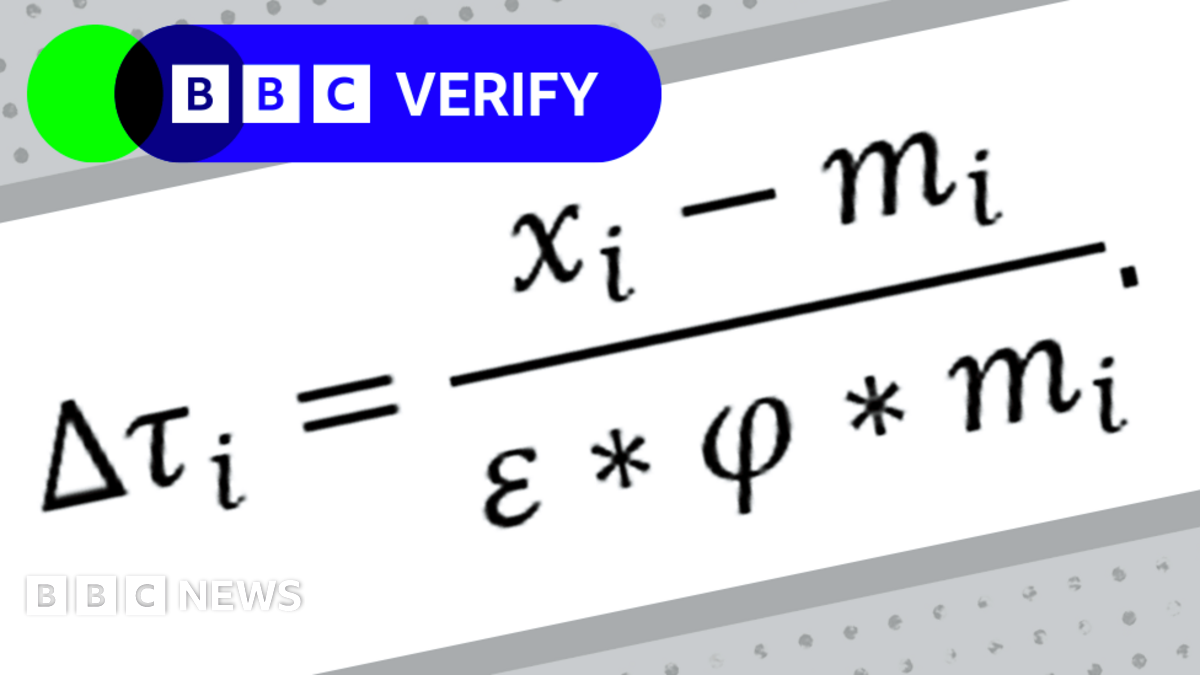
- The White House formula takes the US goods deficit with a country, divides it by total goods imports from that country, then cuts that figure in half.
- That approach gave China a 34% tariff and the European Union a 20% tariff.
- The UK was still hit with a 10% tariff, even though the US does not have a goods trade deficit with it.
- Economists say the method may reduce deficits with individual countries, but it is unlikely to fix the US’s overall trade gap.
Impact on the People
Negative Impact
Higher tariffs could raise prices for imported goods, which may hurt US households and small businesses.
Positive Impact
Some US factories and workers could gain protection from foreign competition if imports become more expensive.
How did each entity affect people?
Rate how each entity in this article affected the American people.
- Primary:President Donald Trumpperson
- Major:European Unioninternational organization
Candidate Entities8 candidates · 5 weighted vote min · 70% decision
- President Donald TrumppersonPrimaryEvaluated
Central actor whose tariff decision and rationale are the main subject of the article.
Include 0 (0%)Ignore 0 (0%)5 to threshold - European Unioninternational organizationMajorEvaluated
Major trading bloc cited as another key example of the tariff calculation.
Include 0 (0%)Ignore 0 (0%)5 to threshold - United KingdomcountryMajorAI selected
Named country discussed as receiving a tariff despite not running a goods trade deficit with the United States.
Include 0 (0%)Ignore 0 (0%)5 to threshold - BBC Verifymedia outletContextCandidate
Reporting unit that investigated and analyzed the tariff calculations.
Include 0 (0%)Ignore 0 (0%)5 to threshold - Jonathan PortespersonContextCandidate
Economist quoted to assess the likely effects of the tariffs.
Include 0 (0%)Ignore 0 (0%)5 to threshold - Kings College Londoneducational / research institutionContextCandidate
Institutional affiliation of Jonathan Portes, cited in his expert quote.
Include 0 (0%)Ignore 0 (0%)5 to threshold - London School of Economicseducational / research institutionContextCandidate
Institutional affiliation of Thomas Sampson, cited in his expert quote.
Include 0 (0%)Ignore 0 (0%)5 to threshold
Comments 0
Comments here are the same thread shown when this article appears in The Pulse.
No comments on this article yet.
Sign in to comment