What Trump has announced on tariffs and why it matters
Read Original Source
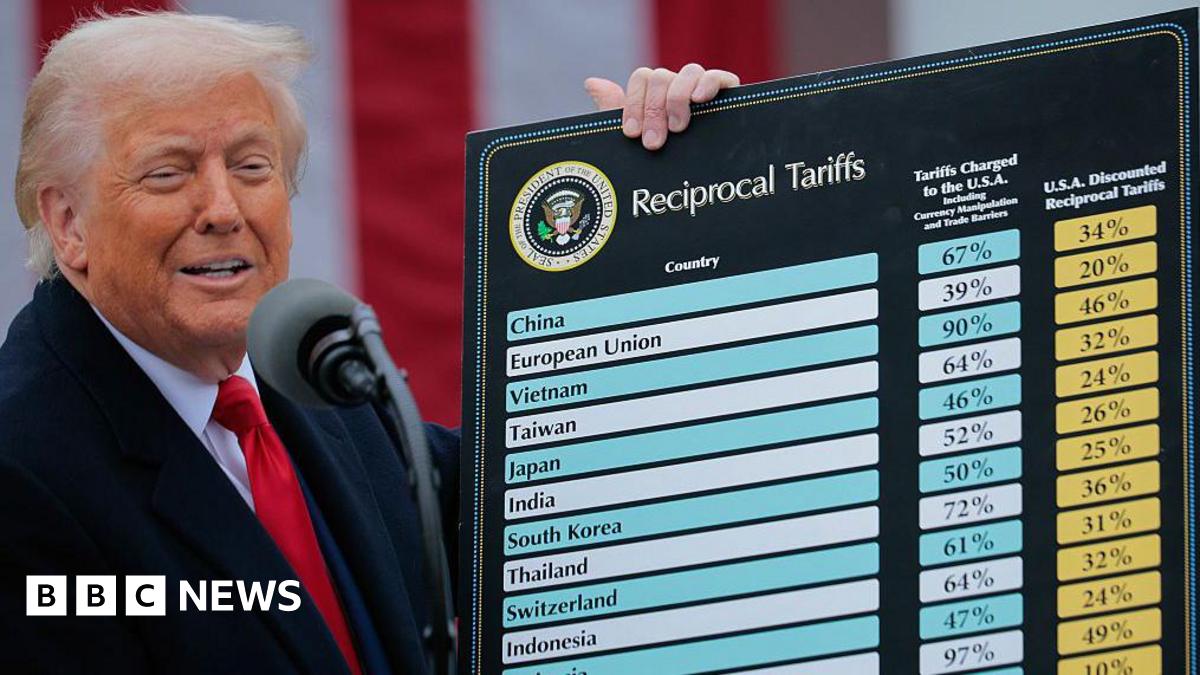
Watch: Three things to know about Trump's tariffs announcement US President Donald Trump announced sweeping tariffs on goods from countries across the world, on what he called "Liberation Day". He says the move will make America wealthy again, but economists warn that prices could rise for Americans and fears of a global trade war have grown. Tariffs are taxes on goods from other countries. Companies bringing the goods into the country pay the amount, typically a percentage of the goods' value, to the government.
AI Summary
Main Idea: President Donald Trump has announced sweeping new tariffs on imports, raising fears of higher prices, trade fights, and wider damage to the global economy.
Key Points:
- Trump set a 10% baseline tariff on imports to the US, with higher rates for about 60 countries and regions, including the European Union.
- He also kept separate tariffs on steel, aluminium, and foreign-made cars.
- Economists warn companies may pass the added costs on to consumers, which could push up prices and slow trade.
- China, the UK, Canada, and the EU are weighing responses, and global leaders say the move could trigger retaliation and hurt growth.
Impact on the People
Negative Impact
Trump’s tariffs could raise prices on food, cars, and other imported goods, hitting US households and small businesses.
Positive Impact
Some US factories and workers may benefit if more shoppers buy American-made goods.
How did each entity affect people?
Rate how each entity in this article affected the American people.
- Primary:President Donald Trumpperson
- Primary:United Statescountry
- Major:Canadacountry
Candidate Entities8 candidates · 5 weighted vote min · 70% decision
- President Donald TrumppersonPrimaryEvaluated
Central actor who announced the sweeping tariffs and whose rationale and risks drive the article.
Include 0 (0%)Ignore 0 (0%)5 to threshold - United StatescountryPrimaryEvaluated
Primary country affected by the tariff decision and the center of the trade and pricing impact discussed.
Include 0 (0%)Ignore 0 (0%)5 to threshold - CanadacountryMajorEvaluated
Named country promising retaliation and imposing countermeasures against US tariffs.
Include 0 (0%)Ignore 0 (0%)5 to threshold - ChinacountryMajorAI selected
Major trading rival named in the retaliation and free-trade implications of the tariffs.
Include 0 (0%)Ignore 0 (0%)5 to threshold - European Unioninternational organizationMajorAI selected
Named trading bloc facing a 20% tariff and preparing a coordinated response.
Include 0 (0%)Ignore 0 (0%)5 to threshold - Prime Minister Mark CarneypersonMajorAI selected
Named Canadian leader announcing retaliation against US tariffs.
Include 0 (0%)Ignore 0 (0%)5 to threshold - United KingdomcountryMajorAI selected
Specifically singled out for the 10% baseline tariff and discussed as a major affected economy.
Include 0 (0%)Ignore 0 (0%)5 to threshold - Business Secretary Jonathan ReynoldspersonContextCandidate
Named UK minister briefing MPs on possible retaliatory tariff effects.
Include 0 (0%)Ignore 0 (0%)5 to threshold
Comments 0
Comments here are the same thread shown when this article appears in The Pulse.
No comments on this article yet.
Sign in to comment