Supreme Court denies challenges to laws banning assault-style weapons and high-capacity magazines
Read Original Source
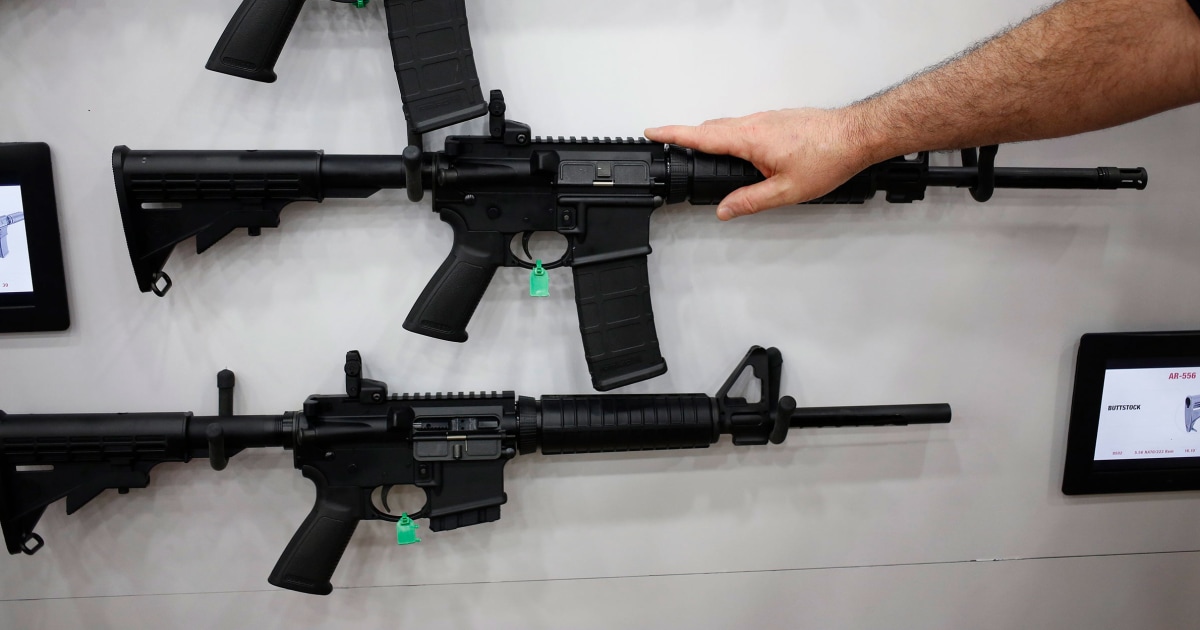
WASHINGTON — The Supreme Court on Monday declined to hear two major gun cases challenging a Maryland law that bans assault-style weapons, including the AR-15 semiautomatic rifle that has been used in high-profile mass shootings, and a Rhode Island restriction on large-capacity magazines. Limited time: Save 25% on NBC News subscription Get exclusive reporting, live Q&As and ad-free reading. As a result, the two laws remain in effect.
AI Summary
Main Idea: The Supreme Court declined to hear challenges to state bans on assault-style weapons and high-capacity magazines, leaving the laws in place.
Key Points:
- The court turned away cases involving Maryland’s ban on assault-style weapons and Rhode Island’s limit on magazines holding more than 10 rounds.
- The decision means both state laws stay in force for now.
- Justice Brett Kavanaugh said the AR-15 issue should likely be addressed by the court soon.
- Justice Clarence Thomas, joined by two other conservatives, said Maryland’s ban likely conflicts with the court’s recent gun-rights ruling.
Impact on the People
Negative Impact
Gun bans on assault-style weapons and large magazines stay in force, which may reduce access for some gun owners and stores. Leaves the long-term legal fight unresolved.
Positive Impact
No clear positive impact identified.
How did each entity affect people?
Rate how each entity in this article affected the American people.
No entity suggestions or linked entities saved yet.
Candidate Entities11 candidates · 5 weighted vote min · 70% decision
- Supreme Court of the United Statesgovernment agency or bodyPrimaryAI selected
Central decision-maker that declined to hear the gun cases, leaving the challenged laws in place.
Include 0 (0%)Ignore 0 (0%)5 to threshold - 1st U.S. Circuit Court of Appealsgovernment agency or bodyMajorAI selected
Federal appeals court that upheld the Rhode Island magazine ban.
Include 0 (0%)Ignore 0 (0%)5 to threshold - 4th Circuit U.S. Court of Appealsgovernment agency or bodyMajorAI selected
Federal appeals court whose ruling upholding the Maryland ban is a key part of the story.
Include 0 (0%)Ignore 0 (0%)5 to threshold - Justice Brett KavanaughpersonMajorAI selected
Named justice who issued a separate statement saying the court should address the AR-15 issue soon.
Include 0 (0%)Ignore 0 (0%)5 to threshold - Justice Clarence ThomaspersonMajorAI selected
Named justice who wrote a dissent arguing Maryland’s ban likely conflicts with recent precedent.
Include 0 (0%)Ignore 0 (0%)5 to threshold - MarylandstateMajorAI selected
Its assault-style weapons ban is one of the two state laws at the center of the article.
Include 0 (0%)Ignore 0 (0%)5 to threshold - Rhode IslandstateMajorAI selected
Its large-capacity magazine restriction is the other state law at issue.
Include 0 (0%)Ignore 0 (0%)5 to threshold
Comments 0
Comments here are the same thread shown when this article appears in The Pulse.
No comments on this article yet.
Sign in to comment