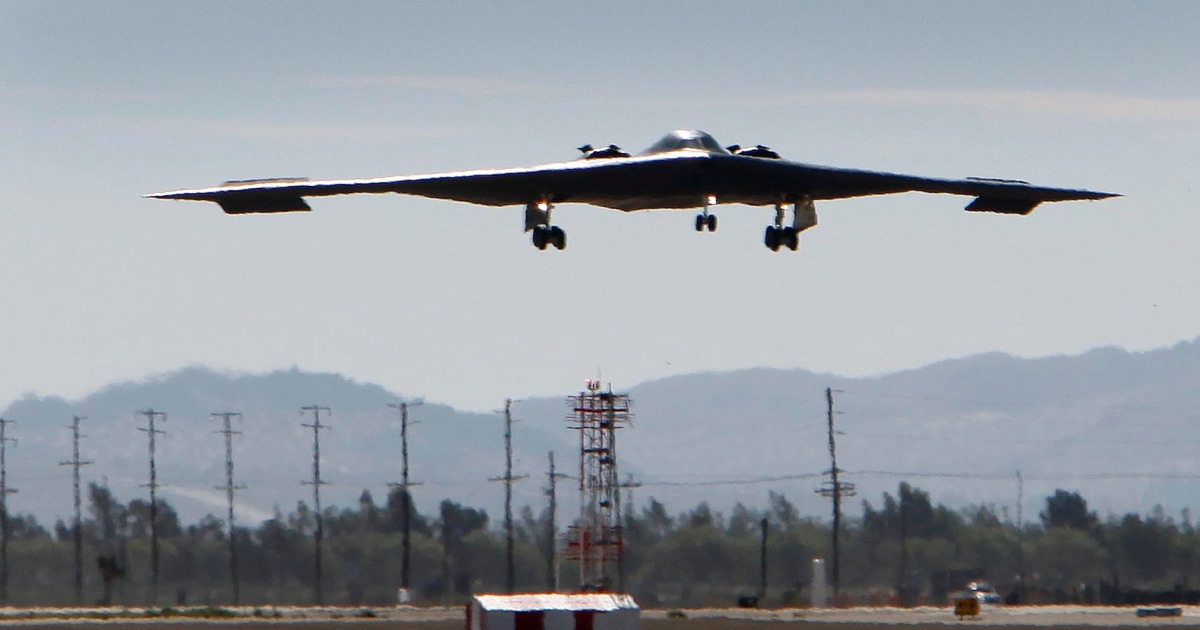
B-2 stealth bombers and 30,000-pound bunker busters: Why striking Iran’s nuclear sites is such a difficult feat
Read Original Source
Limited time: Save 25% on NBC News subscription Get exclusive reporting, live Q&As and ad-free reading. Follow live updates. DUBAI, United Arab Emirates — Iran is staring down the possibility of seeing its most important nuclear facilities hit by a 30,000-pound American bomb.
AI Summary
Main Idea: Trump is weighing a U.S. strike on Iran’s nuclear sites, but experts say destroying the hardest target would be very difficult and could widen the war.
Key Points:
- Iran’s Fordo nuclear site is buried deep under a mountain and is seen as nearly impossible to destroy without the U.S. GBU-57 bunker buster and B-2 stealth bomber.
- Military experts say Fordo would likely need multiple precise strikes, and even then the damage could be hard to confirm.
- Iran has warned it would hit U.S. bases and other assets in the region if the U.S. joins the fight, raising the risk of a broader conflict.
- Israel has already weakened parts of Iran’s defenses, but analysts say leaving Fordo intact would mean Iran could still keep building toward a bomb.
Impact on the People
Negative Impact
A US strike on Iran could push up oil prices, raise gas and heating costs, and increase the risk of broader war that could threaten troops and markets.
Positive Impact
A successful strike on Iran’s hardest nuclear site could slow Iran’s bomb effort and may reduce the chance of a future nuclear threat.
How did each entity affect people?
Rate how each entity in this article affected the American people.
No entity suggestions or linked entities saved yet.
Candidate Entities11 candidates · 5 weighted vote min · 70% decision
- Ayatollah Ali KhameneipersonPrimaryAI selected
Iranian supreme leader whose warning and status as a target are central to the story.
Include 0 (0%)Ignore 0 (0%)5 to threshold - President Donald TrumppersonPrimaryAI selected
Central decision-maker whose statements and possible strike options drive the article.
Include 0 (0%)Ignore 0 (0%)5 to threshold - B-2 Spirit stealth bomberbrand / productMajorAI selected
The only aircraft identified as capable of delivering the bunker-buster weapon central to the article.
Include 0 (0%)Ignore 0 (0%)5 to threshold - Fordo plantbrand / productMajorAI selected
Iran’s fortified nuclear facility is the main target discussed, though not an accountable actor.
Include 0 (0%)Ignore 0 (0%)5 to threshold - GBU-57 Massive Ordnance Penetratorbrand / productMajorAI selected
The 30,000-pound bunker-buster bomb at the center of the feasibility discussion.
Include 0 (0%)Ignore 0 (0%)5 to threshold - IsraelcountryMajorAI selected
Israel’s attacks on Iran and its push for U.S. involvement are a major part of the article.
Include 0 (0%)Ignore 0 (0%)5 to threshold - United StatescountryMajorAI selected
The U.S. is the potential strike actor and central military power discussed throughout.
Include 0 (0%)Ignore 0 (0%)5 to threshold
Comments 0
Comments here are the same thread shown when this article appears in The Pulse.
No comments on this article yet.
Sign in to comment