How ranked choice voting works: A guide ahead of New York City's primary
Read Original Source
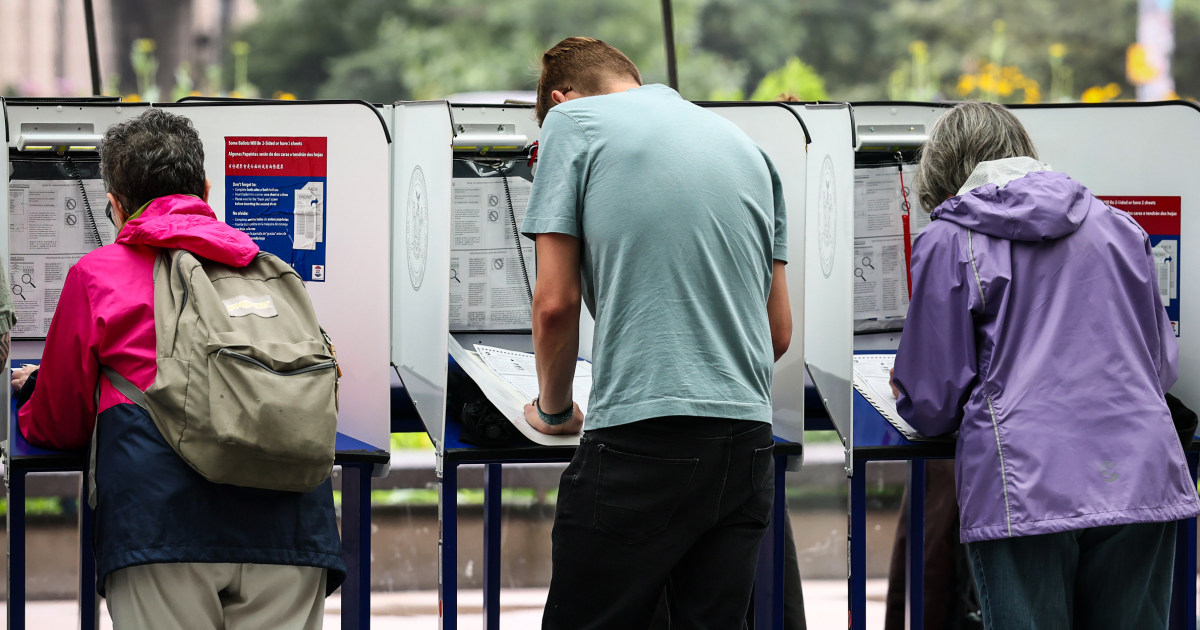
When New Yorkers fill out ballots in Tuesday’s mayoral primary, they’ll be able to choose more than just one candidate. They can pick a second choice. And a third. And a fourth. And a fifth. Limited time: Save 25% on NBC News subscription Get exclusive reporting, live Q&As and ad-free reading. It’s part of a process called ranked choice voting, a system that lets voters rank candidates in order of preference rather than pick just one.
AI Summary
Main Idea: The Board of Elections is preparing to count New York City’s primary ballots under ranked choice voting, a system that lets voters rank candidates and can take longer to produce final results.
Key Points:
- Voters in New York City can rank up to five candidates in a race, but they do not have to fill out every choice.
- If no candidate gets more than 50% in the first round, the last-place candidate is dropped and those ballots move to the next choice.
- The city will post first-round results on election night, then finish later elimination rounds after more ballots are counted.
- Supporters say ranked choice voting builds broader support and avoids low-percentage winners, while critics say it is confusing and can lead to errors or thrown-out ballots.
Impact on the People
Negative Impact
Ranked choice voting can confuse some voters and delay final results, which may hurt trust in elections.
Positive Impact
The Board of Elections can use ranked choice voting to let people rank more choices and help winners gain broader support.
How did each entity affect people?
Rate how each entity in this article affected the American people.
- Major:Board of Electionsgovernment agency or body
Candidate Entities9 candidates · 5 weighted vote min · 70% decision
- Board of Electionsgovernment agency or bodyMajorEvaluated
Central election authority responsible for posting and tabulating the ranked choice voting results in New York City.
Include 0 (0%)Ignore 0 (0%)5 to threshold - Zohran MamdanipersonMajorAI selected
Named mayoral contender cited as using cross-endorsements to consolidate support under ranked choice voting.
Include 0 (0%)Ignore 0 (0%)5 to threshold - Brad LanderpersonContextCandidate
Named mayoral contender mentioned as a cross-endorsement partner in the ranked choice voting context.
Include 0 (0%)Ignore 0 (0%)5 to threshold - Common Cause New Yorknonprofit / NGOContextCandidate
Advocacy group quoted in support of ranked choice voting and its adoption in New York.
Include 0 (0%)Ignore 0 (0%)5 to threshold - FairVotenonprofit / NGOContextCandidate
Election reform organization quoted in support of ranked choice voting and used to explain its benefits.
Include 0 (0%)Ignore 0 (0%)5 to threshold - Foundation for Government Accountabilitynonprofit / NGOContextCandidate
Conservative advocacy organization whose senior fellow is quoted criticizing ranked choice voting.
Include 0 (0%)Ignore 0 (0%)5 to threshold - Michael BlakepersonContextCandidate
Named mayoral contender mentioned as a cross-endorsement partner in the ranked choice voting context.
Include 0 (0%)Ignore 0 (0%)5 to threshold
Comments 0
Comments here are the same thread shown when this article appears in The Pulse.
No comments on this article yet.
Sign in to comment