As questions mount over Texas floods, a key decision-maker remains silent
Read Original Source
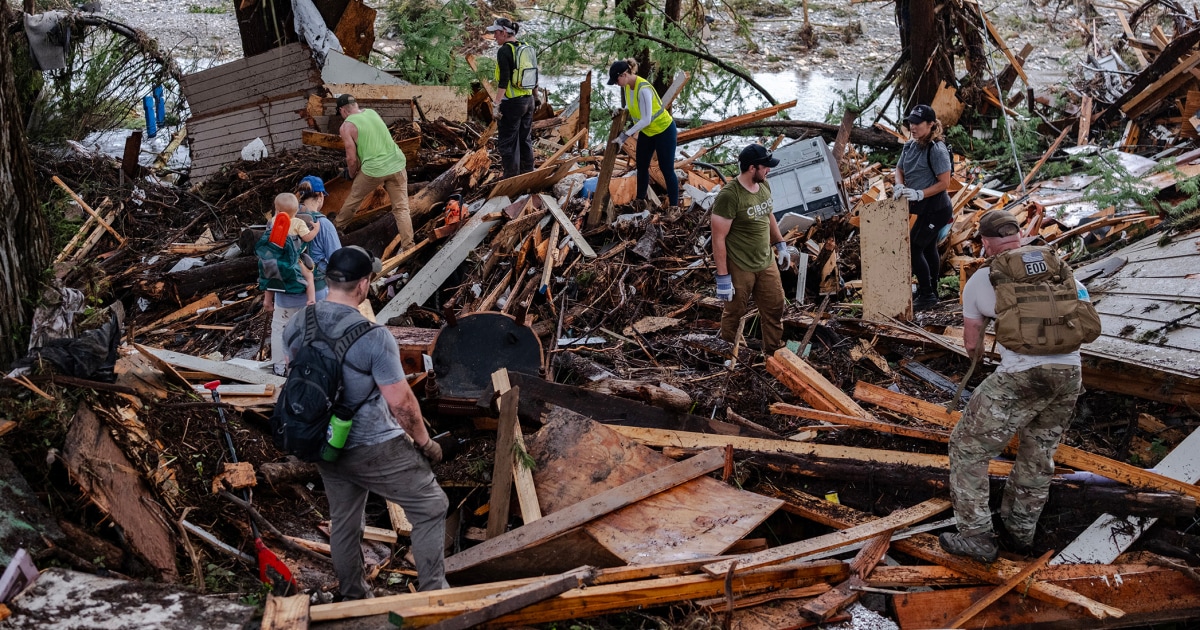
KERRVILLE, Texas — Before the flash flooding in Texas' Hill Country materialized in the early hours of July 4, Kerr County’s most senior elected official said he had no inkling of the pending disaster that would sweep away structures and set off harrowing rescues across the region. Limited time: Save 25% on NBC News subscription Get exclusive reporting, live Q&As and ad-free reading.
AI Summary
Main Idea: Kerr County Judge Rob Kelly is under scrutiny after deadly Texas floods, as he has stayed silent while questions grow about warning systems and emergency decisions.
Key Points:
- Kelly said after the flooding that he had no warning the disaster was coming and that Kerr County did not have a river siren system like some nearby counties.
- County emergency staff, including emergency coordinator William “Dub” Thomas, have also not publicly explained what actions were taken before the flood.
- Records and reports show Kerr County did not use the state alert system to send urgent safety instructions to all phones in the area, and residents describe mixed or missing alerts.
- Officials now say there will be an after-action review, as families and local leaders push for answers about evacuation timing, communication, and who was in charge.
Impact on the People
Negative Impact
Slow or unclear action by Kerr County leaders may have delayed warnings, raising death risk and leaving households, campers, and small businesses with greater loss and higher recovery costs.
Positive Impact
The public review may push counties to improve flood alerts, planning, and emergency communication, which could help protect communities in future storms.
How did each entity affect people?
Rate how each entity in this article affected the American people.
- Primary:County Judge Rob Kellyperson
- Primary:Kerr Countycounty
Candidate Entities11 candidates · 5 weighted vote min · 70% decision
- County Judge Rob KellypersonPrimaryEvaluated
Central decision-maker in Kerr County whose silence and statements are a major focus of the article.
Include 0 (0%)Ignore 0 (0%)5 to threshold - Kerr CountycountyPrimaryEvaluated
Core jurisdiction under scrutiny for emergency preparedness, alerts, and command responsibility during the floods.
Include 0 (0%)Ignore 0 (0%)5 to threshold - National Weather Servicegovernment agency or bodyMajorAI selected
Central public agency whose warnings and emergency upgrade are key to the timeline and response.
Include 0 (0%)Ignore 0 (0%)5 to threshold - William “Dub” ThomaspersonMajorAI selected
Kerr County’s emergency management coordinator and a key official whose actions and lack of public comment are directly.
Include 0 (0%)Ignore 0 (0%)5 to threshold - Federal Emergency Management Agencygovernment agency or bodyContextCandidate
Cited for records showing Kerr County did not use its public alert system to send warnings.
Include 0 (0%)Ignore 0 (0%)5 to threshold - Governor Greg AbbottpersonContextCandidate
Named state official present in the broader response and cited for context, but not the article’s main focus.
Include 0 (0%)Ignore 0 (0%)5 to threshold - Kerr County Sheriffs Officegovernment agency or bodyContextCandidate
Mentioned in connection with CodeRed alerts and emergency dispatch coordination.
Include 0 (0%)Ignore 0 (0%)5 to threshold
Comments 0
Comments here are the same thread shown when this article appears in The Pulse.
No comments on this article yet.
Sign in to comment