Trump reaches agreement with E.U. to lower tariffs to 15%
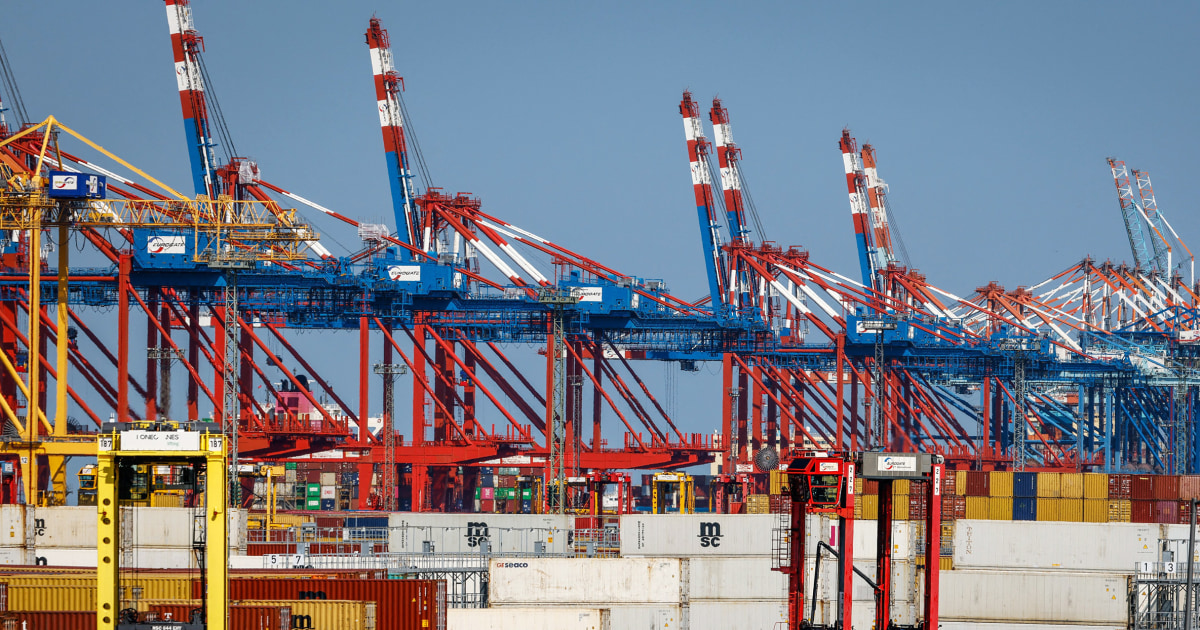
Read Original Source
President Donald Trump on Sunday announced a trade agreement with the European Union that would set tariffs at 15%, ending what had been months of uncertainty surrounding trade with the United States’ largest trade partner. Limited time: Save 25% on NBC News subscription Get exclusive reporting, live Q&As and ad-free reading. The tariff rate is a reduction from the 30% that Trump threatened on July 12 and the 20% he said he would impose on April 2. Announcing the agreement, Trump said the E.U.
AI Summary
Main Idea: President Donald Trump and the European Union reached a trade deal that lowers tariffs on most EU goods to 15% and avoids an immediate trade fight.
Key Points:
- The new tariff rate is lower than the 30% Trump had threatened and the 20% he had earlier said he might impose.
- Ursula von der Leyen said the deal brings stability and predictability, while Trump said it was satisfactory to both sides.
- Some tariffs stay in place, including 50% duties on steel, and more tariffs could still be added on products like pharmaceuticals and semiconductors.
- The agreement also includes expected EU purchases of U.S. energy and military equipment, though the details are still unclear.
Impact on the People
Negative Impact
Higher tariffs can mean more expensive imported goods, especially cars, drugs, and some foods, and US companies that buy from Europe may face higher costs.
Positive Impact
The deal may reduce the risk of a trade war, which could help keep supply chains steadier and protect some jobs and market prices.
How did each entity affect people?
Rate how each entity in this article affected the American people.
- Primary:European Unioninternational organization
- Primary:President Donald Trumpperson
Candidate Entities8 candidates · 5 weighted vote min · 70% decision
- European Unioninternational organizationPrimaryEvaluated
Core institutional actor in the trade agreement and tariff negotiations.
Include 0 (0%)Ignore 0 (0%)5 to threshold - President Donald TrumppersonPrimaryEvaluated
Central actor who announced and described the U.S.-E.U. trade agreement and tariff terms.
Include 0 (0%)Ignore 0 (0%)5 to threshold - European Commission President Ursula von der LeyenpersonPrimaryAI selected
Central counterpart in the agreement, quoted on the deal’s terms and significance.
Include 0 (0%)Ignore 0 (0%)5 to threshold - Representative Jamieson GreerpersonMajorAI selected
U.S. Trade Representative named as a key negotiator with the European Union.
Include 0 (0%)Ignore 0 (0%)5 to threshold - Secretary Howard LutnickpersonMajorAI selected
Commerce Secretary directly involved in the negotiations and cited on possible future tariffs.
Include 0 (0%)Ignore 0 (0%)5 to threshold - GermanycountryContextCandidate
Named in responses to the deal, especially regarding automotive tariffs and export impact.
Include 0 (0%)Ignore 0 (0%)5 to threshold - German auto trade group VDAunion / trade associationMinorCandidate
Named trade association quoted on the impact of tariffs on German auto exporters.
Include 0 (0%)Ignore 0 (0%)5 to threshold
Comments 0
Comments here are the same thread shown when this article appears in The Pulse.
No comments on this article yet.
Sign in to comment