A decade of Supreme Court rulings have given states increasingly unfettered power in redistricting
Read Original Source
WASHINGTON — In June 2019, the Supreme Court swept aside the idea that federal courts could rein in state lawmakers' power to draw legislative maps designed primarily to entrench their own party's power. Limited time: Save 25% on NBC News subscription Get exclusive reporting, live Q&As and ad-free reading.
AI Summary
Main Idea: A series of Supreme Court rulings has given Texas and other states far more freedom to draw political maps for partisan gain.
Key Points:
- The court ruled in 2019 that federal judges cannot block partisan gerrymandering, leaving the issue mostly to states and Congress.
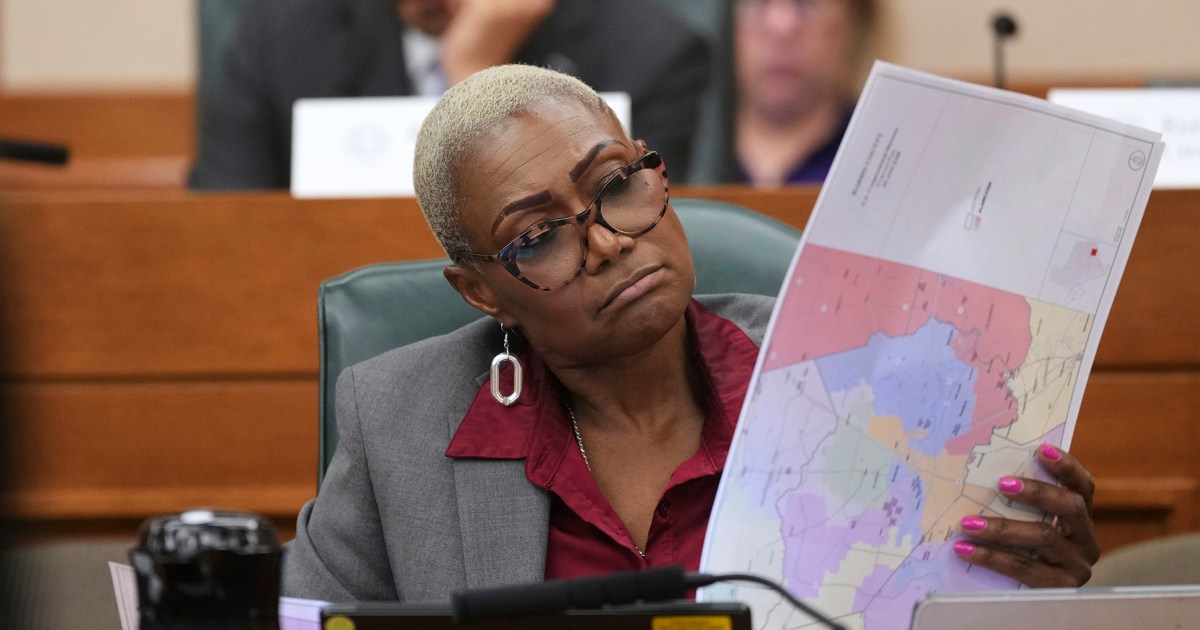
- Texas is now moving to redraw its congressional map mid-decade to help Republicans keep control of the House in 2026.
- Democrats in California and other states are considering countersteps, raising fears of a new redistricting arms race.
- The Voting Rights Act still limits map drawing in some cases, but the Supreme Court has weakened parts of that law and may weaken it further.
Impact on the People
Negative Impact
Supreme Court limits on redistricting let states like Texas draw safer maps for one party, which can weaken voter choice and make House control less responsive to public votes.
Positive Impact
Independent commissions and court rules still offer some checks,.
How did each entity affect people?
Rate how each entity in this article affected the American people.
- Primary:Supreme Courtgovernment agency or body
- Primary:Texasstate
Candidate Entities9 candidates · 5 weighted vote min · 70% decision
- Supreme Courtgovernment agency or bodyPrimaryEvaluated
Central institution whose rulings on redistricting and voting rights shape the entire article.
Include 0 (0%)Ignore 0 (0%)5 to threshold - TexasstatePrimaryEvaluated
Central state actor proposing and advancing the mid-decade redistricting plan.
Include 0 (0%)Ignore 0 (0%)5 to threshold - Governor Greg AbbottpersonPrimaryAI selected
Named official driving the Texas mid-decade redistricting push.
Include 0 (0%)Ignore 0 (0%)5 to threshold - American Civil Liberties Unionnonprofit / NGOMajorAI selected
Major advocacy organization represented in the voting-rights fight and quoted on the implications.
Include 0 (0%)Ignore 0 (0%)5 to threshold - Justice John RobertspersonMajorAI selected
Chief Justice whose majority opinion is central to the article’s legal backdrop.
Include 0 (0%)Ignore 0 (0%)5 to threshold - President Donald TrumppersonMajorAI selected
Named national political figure urging the Texas redraw and affecting the story’s stakes.
Include 0 (0%)Ignore 0 (0%)5 to threshold - Justice Elena KaganpersonContextCandidate
Supreme Court justice quoted warning about the consequences of nonintervention.
Include 0 (0%)Ignore 0 (0%)5 to threshold
Comments 0
Comments here are the same thread shown when this article appears in The Pulse.
No comments on this article yet.
Sign in to comment