Chip deal: Why the US is taking a cut from China sales
Read Original Source
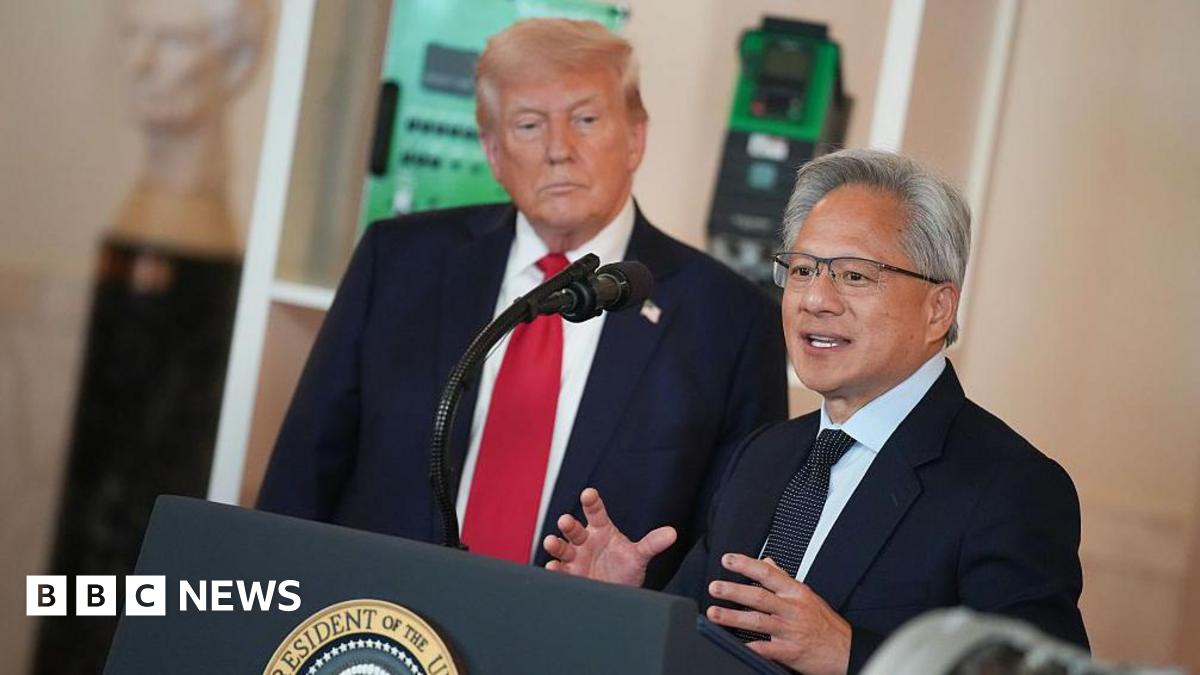
Nvidia boss Jensen Huang has been lobbying the White House over China chip sales Unusual. Quid pro quo. Unprecedented. That is some of the reaction to news that two of the world's tech giants will pay the US government 15% of their revenue from selling certain advanced chips to China. Industry watchers, former government advisers, policy makers and trade experts have been giving their views on the deal.
AI Summary
Main Idea: President Donald Trump has struck a deal that lets Nvidia and AMD sell certain chips to China if they give the US government 15% of that revenue.
Key Points:
- The chips were earlier banned over national security concerns, but the Trump administration later lifted that ban.
- Nvidia and AMD made China-specific chips for AI uses, and China is a major market for both firms.
- Critics say the arrangement is unusual and could look like a government cut or tax on doing business with China.
- The deal may also fit into wider Trump trade talks, including pressure over tariffs and rare-earth minerals.
Impact on the People
Negative Impact
The 15% cut on chip sales to China may raise costs for Nvidia and AMD, which can pressure stock prices, hiring, and pensions tied to the market.
Positive Impact
The deal could bring up to $2 billion to the US government and may help keep some chip sales and jobs linked to China.
How did each entity affect people?
Rate how each entity in this article affected the American people.
- Primary:Chinacountry
Candidate Entities12 candidates · 5 weighted vote min · 70% decision
- ChinacountryPrimaryEvaluated
Core counterpart in the chip-sales dispute and the market affected by the deal.
Include 0 (0%)Ignore 0 (0%)5 to threshold - Advanced Micro DevicescompanyPrimaryAI selected
The other central chip company in the deal, directly tied to China sales and the 15% revenue cut.
Include 0 (0%)Ignore 0 (0%)5 to threshold - Jensen HuangpersonPrimaryAI selected
Nvidia’s chief executive whose lobbying and White House meeting are presented as key to the deal.
Include 0 (0%)Ignore 0 (0%)5 to threshold - NvidiacompanyPrimaryAI selected
One of the two central chip companies in the deal, directly tied to China sales and the 15%.
Include 0 (0%)Ignore 0 (0%)5 to threshold - President Donald TrumppersonPrimaryAI selected
Central decision-maker behind the policy shift and agreement described in the article.
Include 0 (0%)Ignore 0 (0%)5 to threshold - United States governmentgovernment agency or bodyPrimaryAI selected
The actor taking the 15% cut from chip sales and implementing the policy change.
Include 0 (0%)Ignore 0 (0%)5 to threshold - Biden administrationgovernment agency or bodyMajorAI selected
Mentioned as the prior administration that imposed the earlier export ban shaping the current deal.
Include 0 (0%)Ignore 0 (0%)5 to threshold
Comments 0
Comments here are the same thread shown when this article appears in The Pulse.
No comments on this article yet.
Sign in to comment