Feds seek two years in prison for ex-Google engineer Levandowski
Read Original Source
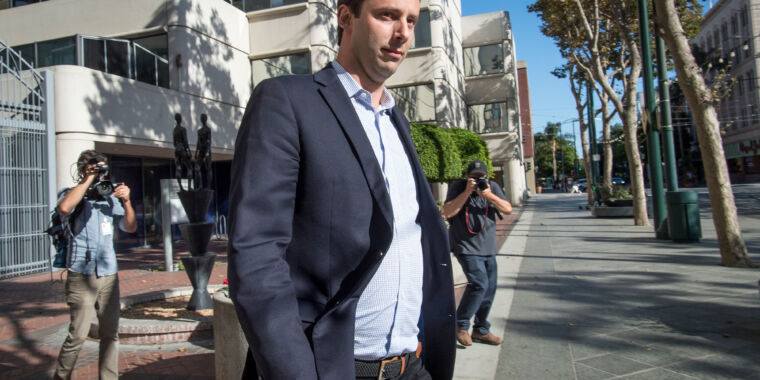
The federal government on Tuesday asked a federal judge to sentence Anthony Levandowski to 27 months in prison for theft of trade secrets. In March, Levandowski pled guilty to stealing a single confidential document related to Google’s self-driving technology on his way out the door to his new startup. That startup was quickly acquired by Uber, triggering a titanic legal battle between the companies that was settled in 2018.
AI Summary
Main Idea: The federal government wants former Google engineer Anthony Levandowski sentenced to 27 months in prison for stealing a trade secret, while his lawyers are asking for no jail time.
Key Points:
- Levandowski pleaded guilty in March to stealing one confidential Google document tied to self-driving car technology.
- Prosecutors say he copied Google files before leaving and planned to use the information for Uber and other rivals.
- His lawyers say there is no proof he used or shared Google secrets after leaving the company.
- Levandowski says prison is too harsh because of his health risks, and he asks for home confinement, fines, and community service instead.
Impact on the People
Negative Impact
The case may raise costs for consumers and taxpayers if big tech trade secret fights keep draining money into lawsuits and court battles.
Positive Impact
A prison sentence could deter workers from stealing company secrets and help protect innovation for businesses and jobs.
How did each entity affect people?
Rate how each entity in this article affected the American people.
- Primary:Anthony Levandowskiperson
- Primary:Googlecompany
- Major:Federal governmentgovernment agency or body
Candidate Entities11 candidates · 5 weighted vote min · 70% decision
- Anthony LevandowskipersonPrimaryEvaluated
Central figure in the sentencing request and the article’s main subject.
Include 0 (0%)Ignore 0 (0%)5 to threshold - GooglecompanyPrimaryEvaluated
The alleged victim of trade-secret theft and a core company in the dispute.
Include 0 (0%)Ignore 0 (0%)5 to threshold - Federal governmentgovernment agency or bodyMajorEvaluated
The party asking for a prison sentence and making the central prosecutorial argument.
Include 0 (0%)Ignore 0 (0%)5 to threshold - Judge William AlsuppersonMajorAI selected
Named judge who will decide Levandowski’s punishment.
Include 0 (0%)Ignore 0 (0%)5 to threshold - UbercompanyMajorAI selected
Levandowski’s prospective employer and a major company in the legal conflict.
Include 0 (0%)Ignore 0 (0%)5 to threshold - WaymocompanyMajorAI selected
Google’s self-driving unit tied to the trade-secret dispute and evidence discussed in the article.
Include 0 (0%)Ignore 0 (0%)5 to threshold - ProntocompanyContextCandidate
Levandowski’s later startup, mentioned as part of his explanation and current position.
Include 0 (0%)Ignore 0 (0%)5 to threshold - Federal investigatorsgovernment agency or bodyMinorCandidate
Mentioned as having searched for evidence of wrongdoing in the case.
Include 0 (0%)Ignore 0 (0%)5 to threshold
Comments 0
Comments here are the same thread shown when this article appears in The Pulse.
No comments on this article yet.
Sign in to comment