The revealing reason Elizabeth Warren gave for her 2020 loss
Read Original Source
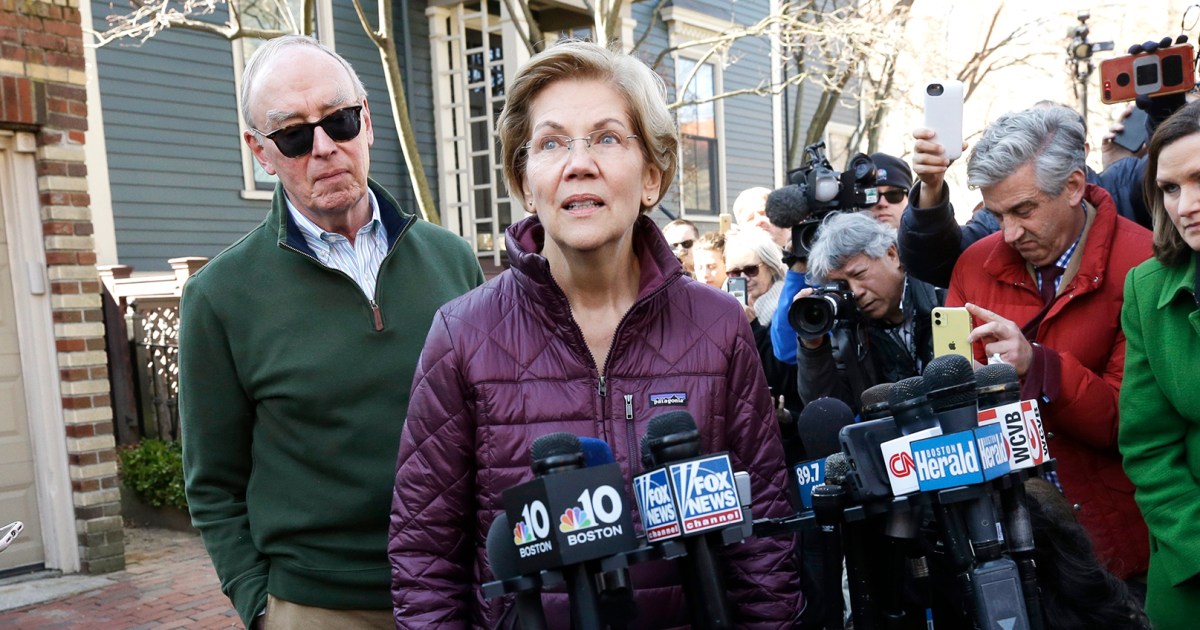
This is an adapted excerpt from “Electable: Why America Hasn’t Put a Woman in the White House ... Yet,” a book by Ali Vitali, Capitol Hill correspondent for NBC News. The book, published Tuesday by Dey Street/HarperCollins, investigates the gendered double standards faced by the female candidates who ran for president in 2020 and answers the larger questions: Why have women struggled to break this glass ceiling — and when will they? “What if you don’t win here?” I could sense instantly that Sen.
AI Summary
Main Idea: Elizabeth Warren’s 2020 presidential campaign fell short, and she said the bigger problem was that voters were not ready to imagine a woman as president.
Key Points:
- Warren lost momentum on Super Tuesday, including in her home state of Massachusetts, where Joe Biden beat her despite little campaigning there.
- The article says gender bias was one part of why women candidates, including Warren, struggled in the 2020 race.
- Warren said she felt like she failed her staff, but she did not blame her policy ideas; she called herself “the imperfect messenger.”
- The piece argues that Warren’s exit showed how electability fears and old ideas about leadership can still shape voters’ choices.
Impact on the People
Negative Impact
The article suggests women candidates can face extra bias, which may leave voters with fewer choices and slow fair competition in presidential races.
Positive Impact
A more diverse press corps and more open talk about sexism could help voters judge candidates more fairly in future elections.
How did each entity affect people?
Rate how each entity in this article affected the American people.
- Primary:Senator Elizabeth Warrenperson
- Major:President Joe Bidenperson
Candidate Entities9 candidates · 5 weighted vote min · 70% decision
- Senator Elizabeth WarrenpersonPrimaryEvaluated
Central political figure whose 2020 campaign loss and reactions are the main subject of the article.
Include 0 (0%)Ignore 0 (0%)5 to threshold - President Joe BidenpersonMajorEvaluated
Major beneficiary of the Super Tuesday outcome and Warren’s defeat, central to the primary narrative.
Include 0 (0%)Ignore 0 (0%)5 to threshold - Senator Bernie SanderspersonMajorAI selected
Major competing candidate discussed as a key factor in Warren’s Massachusetts loss and Super Tuesday context.
Include 0 (0%)Ignore 0 (0%)5 to threshold - Mayor Michael BloombergpersonContextCandidate
Mentioned as a notable rival whose dropout is part of the Super Tuesday aftermath.
Include 0 (0%)Ignore 0 (0%)5 to threshold - Amy KlobucharpersonMinorCandidate
Mentioned as a Biden-alternative candidate who endorsed Biden after South Carolina.
Include 0 (0%)Ignore 0 (0%)5 to threshold - Dey StreetcompanyMinorCandidate
Named publishing imprint associated with the book excerpt and publication context.
Include 0 (0%)Ignore 0 (0%)5 to threshold - HarperCollinscompanyMinorCandidate
Named publisher connected to the book excerpt that frames the article.
Include 0 (0%)Ignore 0 (0%)5 to threshold - Pete ButtigiegpersonMinorCandidate
Mentioned as a Biden-alternative candidate who endorsed Biden after South Carolina.
Include 0 (0%)Ignore 0 (0%)5 to threshold
Comments 0
Comments here are the same thread shown when this article appears in The Pulse.
No comments on this article yet.
Sign in to comment