Democratic mayoral control in big cities is the new ‘blue wall’
Read Original Source
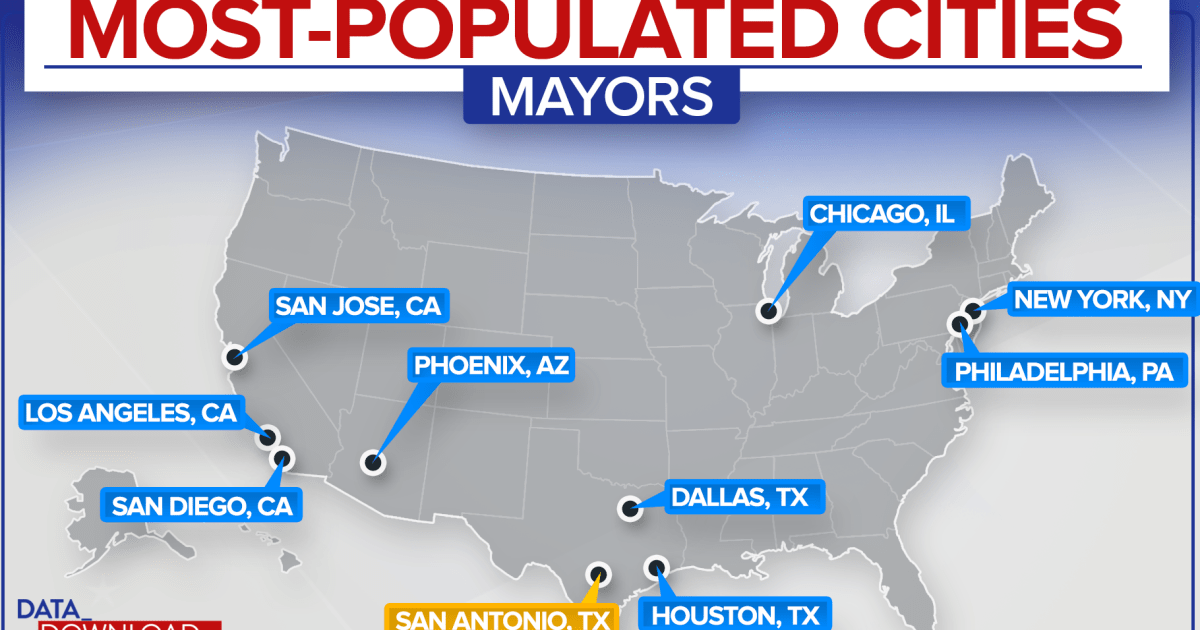
WASHINGTON — One group was noticeably absent among the biggest players in Washington, D.C., last week for the U.S. Conference of Mayors: Republicans. Limited time: Save 25% on NBC News subscription Get exclusive reporting, live Q&As and ad-free reading. There are many ways to measure the much-discussed urban and rural divide in American politics, but one area with the steepest divide, at least on the urban side, is over who runs the country’s largest cities. Take, for example, the 10 largest cities by population.
AI Summary
Main Idea: Democrats now control most of the biggest U.S. cities, while Republicans have lost much of their former influence in city hall.
Key Points:
- In 9 of the 10 largest U.S. cities, the mayor is a Democrat; San Antonio is the only outlier with an independent mayor.
- The article says this marks a big change from 2000, when Republicans held mayoral power in four of those 10 cities.
- Among the 25 largest cities, Republicans now hold only three mayor’s offices, while Democrats dominate the rest.
- The shift matters because big-city mayors can shape national party talent, policy ideas, and election results in places that hold many voters.
Impact on the People
Negative Impact
Fewer Republican mayors in big cities may leave the GOP with less urban know-how, which could mean weaker policy choices for city services, housing, and jobs.
Positive Impact
Democratic control may keep big-city governments aligned with urban voters, which can support policies that affect many workers, riders, and renters.
How did each entity affect people?
Rate how each entity in this article affected the American people.
- Major:Democratspolitical organization
- Major:Republicanspolitical organization
- Major:San Antoniocity
Candidate Entities9 candidates · 5 weighted vote min · 70% decision
- Democratspolitical organizationMajorEvaluated
Central political organization benefiting from control of mayoral offices in major cities.
Include 0 (0%)Ignore 0 (0%)5 to threshold - Republicanspolitical organizationMajorEvaluated
Central political organization discussed as lacking representation in major-city mayoral offices.
Include 0 (0%)Ignore 0 (0%)5 to threshold - San AntoniocityMajorEvaluated
The lone large city in the article not led by a Democrat; central to the contrast being drawn.
Include 0 (0%)Ignore 0 (0%)5 to threshold - JacksonvillecityContextCandidate
One of the few top 25 cities with a Republican mayor, cited as supporting evidence.
Include 0 (0%)Ignore 0 (0%)5 to threshold - Mayor Ronald NirenbergpersonContextCandidate
The only non-Democratic mayor among the largest cities and a named point of comparison in the article.
Include 0 (0%)Ignore 0 (0%)5 to threshold - Michael BloombergpersonContextCandidate
Cited as a former New York mayor who switched party affiliations, illustrating the historical shift.
Include 0 (0%)Ignore 0 (0%)5 to threshold - Oklahoma CitycityContextCandidate
One of the few top 25 cities with a Republican mayor, cited as supporting evidence.
Include 0 (0%)Ignore 0 (0%)5 to threshold - President Donald TrumppersonContextCandidate
Mentioned as the opposing 2020 election winner in a few counties, used for comparison.
Include 0 (0%)Ignore 0 (0%)5 to threshold
Comments 0
Comments here are the same thread shown when this article appears in The Pulse.
No comments on this article yet.
Sign in to comment