Echoes of Swinging Sixties Fan Fears of Resurgent U.S. Inflation
Read Original Source
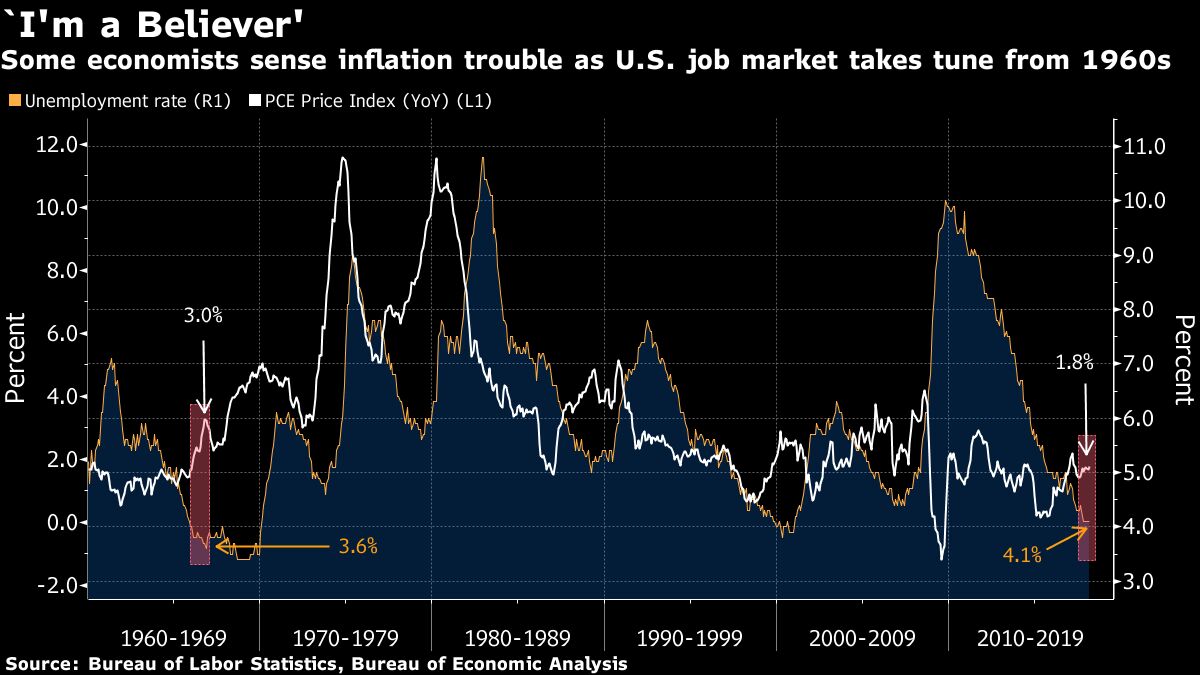
U.S. unemployment looks to be headed down to levels last seen when The Monkees ruled the pop charts and Ford Mustangs roamed the roads. And that’s got some economists and investors worried. Yes, it was the Swinging ’60s -- 1966 to be precise. Joblessness, which now stands at 4.1 percent, fell as low as 3.6 percent. That’s the same rate that Federal Reserve policy makers see the U.S. hitting at the end of next year.
AI Summary
Main Idea: The Federal Reserve’s forecast of very low unemployment is raising concerns that U.S. inflation could pick up again, much like it did in the late 1960s.
Key Points:
- Unemployment in the U.S. is around 4.1 percent now and is expected to fall to about 3.6 percent.
- That jobless rate was last seen in 1966, during the late Swinging Sixties.
- The article says inflation was also low at first in that period, then rose sharply.
- Economists and investors worry that a very tight labor market could help push prices higher again.
Impact on the People
Negative Impact
Lower unemployment can push wages and prices up, which may mean the Federal Reserve raises rates and households face higher borrowing costs and faster inflation.
Positive Impact
Strong job markets can help more workers find jobs and raise pay, which supports spending in many communities.
How did each entity affect people?
Rate how each entity in this article affected the American people.
- Major:Federal Reservegovernment agency or body
Candidate Entities3 candidates · 5 weighted vote min · 70% decision
- Federal Reservegovernment agency or bodyMajorEvaluated
Central policy institution whose projected unemployment and inflation outlook is the core reference point for the article.
Include 0 (0%)Ignore 0 (0%)5 to threshold - Ford Mustangbrand / productMentionCandidate
Briefly mentioned as a historical comparison point for the 1960s economy.
Include 0 (0%)Ignore 0 (0%)5 to threshold - The Monkeescultural institutionMentionCandidate
Briefly mentioned as a 1960s pop-culture benchmark used for comparison.
Include 0 (0%)Ignore 0 (0%)5 to threshold
Comments 0
Comments here are the same thread shown when this article appears in The Pulse.
No comments on this article yet.
Sign in to comment