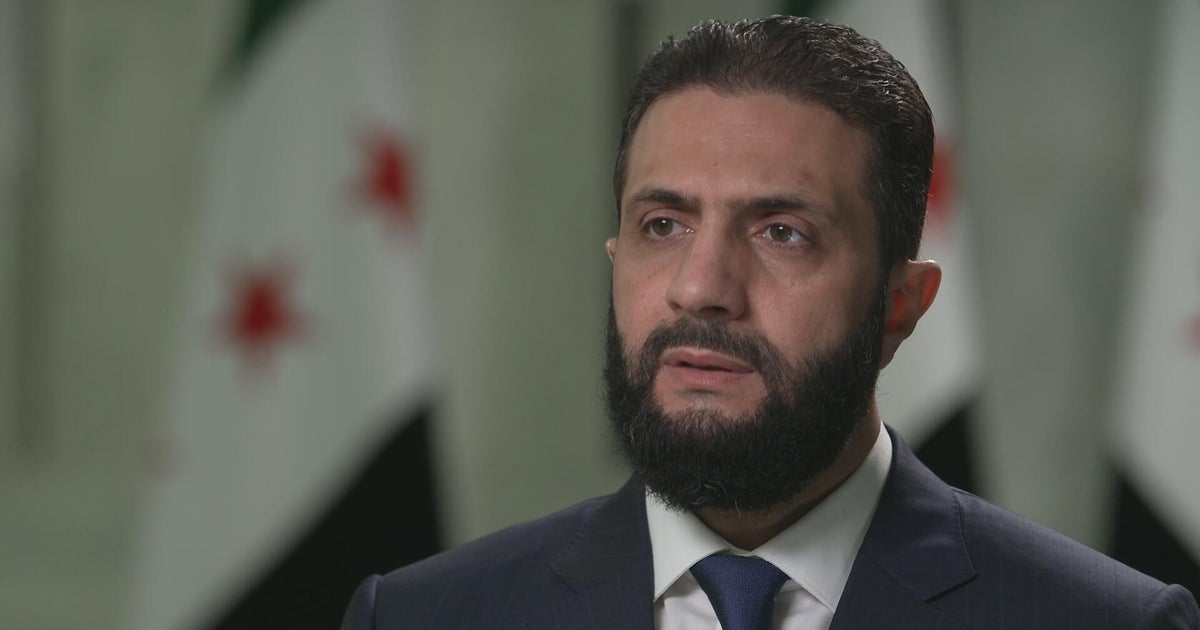
Syrian President Ahmed al-Sharaa on his hopes for rebuilding
Read Original Source
The deal brokered by the Trump administration between Israel and Hamas raises hope not only for an end to the war in Gaza but for a broader transformation of the Middle East. And in some ways, that's been happening already. Israel's massive response in the two years since the October 7th terrorist attacks included decimating the powerful Iran-backed militia Hezbollah, which helped prop up the Syrian dictator Bashar al-Assad, who bombed and used chemical weapons against his own people.
AI Summary
Main Idea: Syrian President Ahmed al-Sharaa says he wants to rebuild Syria, lift sanctions, and move the country toward elections after years of war and the fall of Bashar al-Assad.
Key Points:
- Al-Sharaa showed CBS the destruction left by the civil war and said Syria needs hope, reconstruction, and support for refugees to return home.
- He described his path from former al Qaeda member to president and said he has changed, while defending his past as part of the fight against Assad.
- He wants the United States and other countries to permanently lift sanctions, but Syria still faces deep economic damage and a huge rebuilding bill.
- Al-Sharaa also addressed violence by Syrian forces, tensions with Israel, and his goal of holding general elections once the country is ready.
Impact on the People
Negative Impact
US sanctions relief and talks with Syria could face backlash if al-Sharaa cannot control violence or protect minorities, raising risks for US diplomacy and security.
Positive Impact
Syria’s rebuilding could lower Middle East conflict and refugee pressure, which may help US taxpayers, markets, and consumers if stability improves.
How did each entity affect people?
Rate how each entity in this article affected the American people.
- Primary:
- Major:al Qaedapolitical organization
Candidate Entities7 candidates · 5 weighted vote min · 70% decision
- President Ahmed al-SharaapersonPrimaryEvaluated
Central figure of the article; the story is built around his interview, his role in overthrowing Assad, and.
Include 0 (0%)Ignore 0 (0%)5 to threshold - al Qaedapolitical organizationMajorEvaluated
Important organization in al-Sharaa’s past and a major part of the article’s discussion of his history.
Include 0 (0%)Ignore 0 (0%)5 to threshold - Bashar al-AssadpersonMajorAI selected
Former Syrian president whose rule, flight, and legacy are a major part of the article’s political context.
Include 0 (0%)Ignore 0 (0%)5 to threshold - Hamaspolitical organizationMajorAI selected
Central party to the ceasefire/deal referenced as shaping broader regional change.
Include 0 (0%)Ignore 0 (0%)5 to threshold - Hezbollahpolitical organizationMajorAI selected
Major militia whose weakening is described as important to the Syrian and regional shift.
Include 0 (0%)Ignore 0 (0%)5 to threshold - President Donald TrumppersonMajorAI selected
Mentioned for his administration’s brokered Israel-Hamas deal and for his past meeting with al-Sharaa, which are important to.
Include 0 (0%)Ignore 0 (0%)5 to threshold - MoscowcityMentionCandidate
Mentioned as the place where Assad fled, but only as a passing location reference.
Include 0 (0%)Ignore 0 (0%)5 to threshold
Comments 0
Comments here are the same thread shown when this article appears in The Pulse.
No comments on this article yet.
Sign in to comment