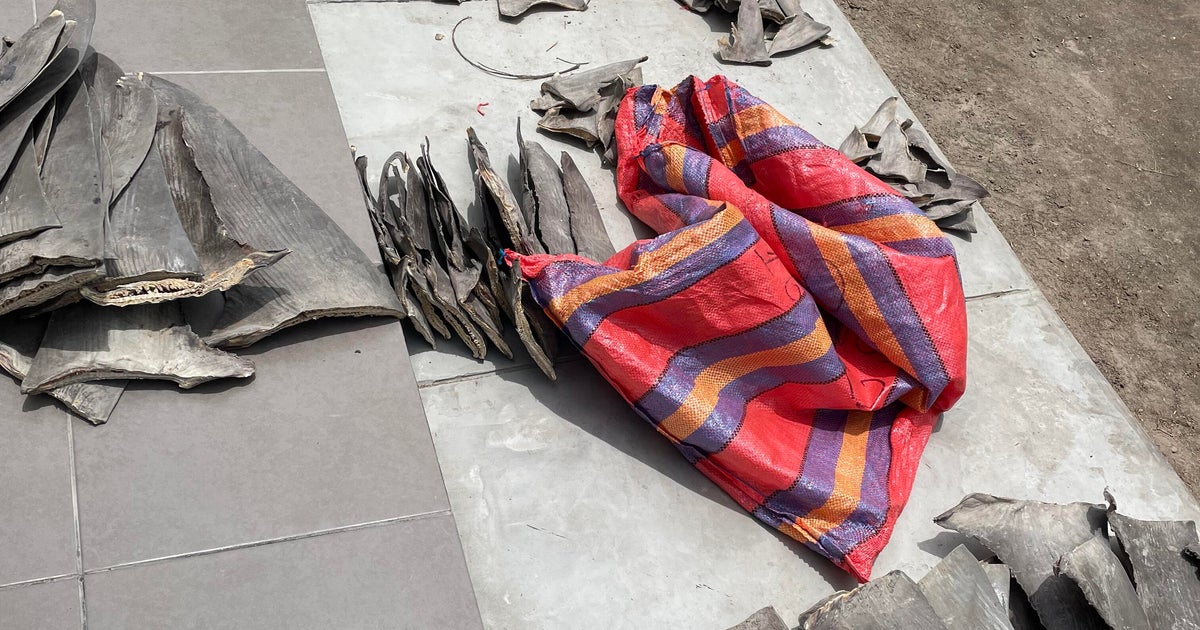
10,000 shark fins worth over $11M seized in major wildlife trafficking bust
Read Original Source
U.S. authorities have assisted the Peruvian government in seizing an estimated 10,000 individual shark fins destined for China — one of the largest wildlife trafficking operations in Latin American history. The bust, on Nov. 10 at an industrial port outside of Lima, led to the arrest of three men tied to a transnational criminal network involved in illegal fishing and wildlife smuggling, according to the United States Fish and Wildlife Service. The cruelty behind the shark fin trade is well-documented.
AI Summary
Main Idea: Peru’s police helped seize about 10,000 shark fins worth more than $11 million in one of Latin America’s biggest wildlife trafficking busts.
Key Points:
- The fins were found at an industrial port outside Lima, and three men were arrested.
- Investigators say the criminal network bought fins from Ecuadorian fishermen and used false papers to make them look like they came from Peru.
- The shipment was headed to China, where shark fin products remain in high demand.
- Officials say the bust shows both the scale of the illegal shark fin trade and the need for stronger enforcement to protect marine life.
Impact on the People
Negative Impact
Illegal shark fin trade can raise prices for wildlife crime and weaken ocean health, which may hurt fisheries and coastal jobs that US consumers rely on.
Positive Impact
The Peru police bust may help cut smuggling networks and support cleaner, more stable seafood markets over time.
How did each entity affect people?
Rate how each entity in this article affected the American people.
No entity suggestions or linked entities saved yet.
Candidate Entities4 candidates · 5 weighted vote min · 70% decision
- Peruvian National Policegovernment agency or bodyMajorAI selected
Key law-enforcement actor working with U.S. authorities to dismantle the trafficking network.
Include 0 (0%)Ignore 0 (0%)5 to threshold - Peruvian National Police Organized Crime Investigation Divisiongovernment agency or bodyMajorAI selected
Specific Peruvian police division said to have led the operation.
Include 0 (0%)Ignore 0 (0%)5 to threshold - United Nationsinternational organizationContextCandidate
Cited for estimates about the scale of illegal wildlife trade and its global significance.
Include 0 (0%)Ignore 0 (0%)5 to threshold - Wildlife Conservation Societynonprofit / NGOMinorCandidate
Nonprofit whose conservation director is quoted warning about extinction risks.
Include 0 (0%)Ignore 0 (0%)5 to threshold
Comments 0
Comments here are the same thread shown when this article appears in The Pulse.
No comments on this article yet.
Sign in to comment