Supreme Court says Trump can't deploy National Guard to Chicago for now
Read Original Source
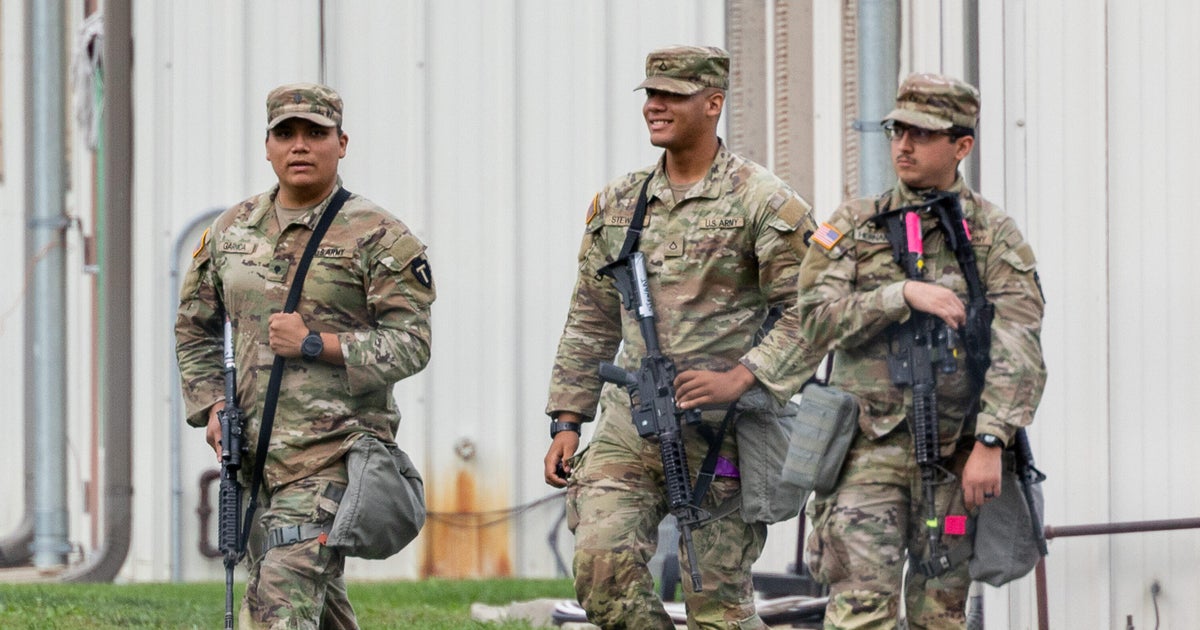
Washington — The Supreme Court on Tuesday rejected a bid by the Trump administration to deploy National Guard members to the Chicago area while a legal challenge moves forward, delivering a setback to President Trump in his effort to use federalized troops in Illinois to ensure enforcement of federal immigration laws. The high court left untouched a judge's decision blocking the government from putting National Guard members on the streets of Chicago and surrounding areas.
AI Summary
Main Idea: The Supreme Court blocked President Donald Trump for now from sending National Guard troops to the Chicago area while a legal fight over his move continues.
Key Points:
- The court refused to lift a lower court order that stopped the Trump administration from deploying the Guard in Illinois.
- The justices said the administration had not shown enough legal basis, at this stage, to federalize the Guard for that purpose.
- Illinois Gov. JB Pritzker and Chicago leaders praised the ruling, while the White House said it would keep pushing its immigration enforcement agenda.
- The case is part of a wider battle over Trump’s use of the National Guard in several cities, including other court challenges in California, Oregon, and Washington, D.C.
Impact on the People
Negative Impact
Blocking National Guard deployment may leave federal sites and immigration operations more exposed in Chicago,. It also lowers the risk of armed troops on city streets.
Positive Impact
No clear positive impact identified.
How did each entity affect people?
Rate how each entity in this article affected the American people.
- Primary:President Donald Trumpperson
- Major:Chicagocity
- Major:Governor JB Pritzkerperson
Candidate Entities11 candidates · 5 weighted vote min · 70% decision
- President Donald TrumppersonPrimaryEvaluated
Main political actor whose attempt to federalize and deploy the National Guard is the core of the story.
Include 0 (0%)Ignore 0 (0%)5 to threshold - ChicagocityMajorEvaluated
City at the center of the deployment fight and the local government involved in the lawsuit.
Include 0 (0%)Ignore 0 (0%)5 to threshold - Governor JB PritzkerpersonMajorEvaluated
Illinois governor who objected to the deployment and publicly framed the ruling as a win.
Include 0 (0%)Ignore 0 (0%)5 to threshold - IllinoisstateMajorAI selected
State whose National Guard was federalized and which sued to block the deployment.
Include 0 (0%)Ignore 0 (0%)5 to threshold - Trump administrationgovernment agency or bodyMajorAI selected
The administration took the action at issue and is directly affected by the court’s ruling.
Include 0 (0%)Ignore 0 (0%)5 to threshold - United States Court of Appeals for the Seventh Circuitgovernment agency or bodyMajorAI selected
Appellate court that upheld part of the lower-court order and is a major actor in the legal timeline.
Include 0 (0%)Ignore 0 (0%)5 to threshold - Judge April PerrypersonContextCandidate
Federal judge whose order blocking deployment was central to the lower-court proceedings.
Include 0 (0%)Ignore 0 (0%)5 to threshold
Comments 0
Comments here are the same thread shown when this article appears in The Pulse.
No comments on this article yet.
Sign in to comment