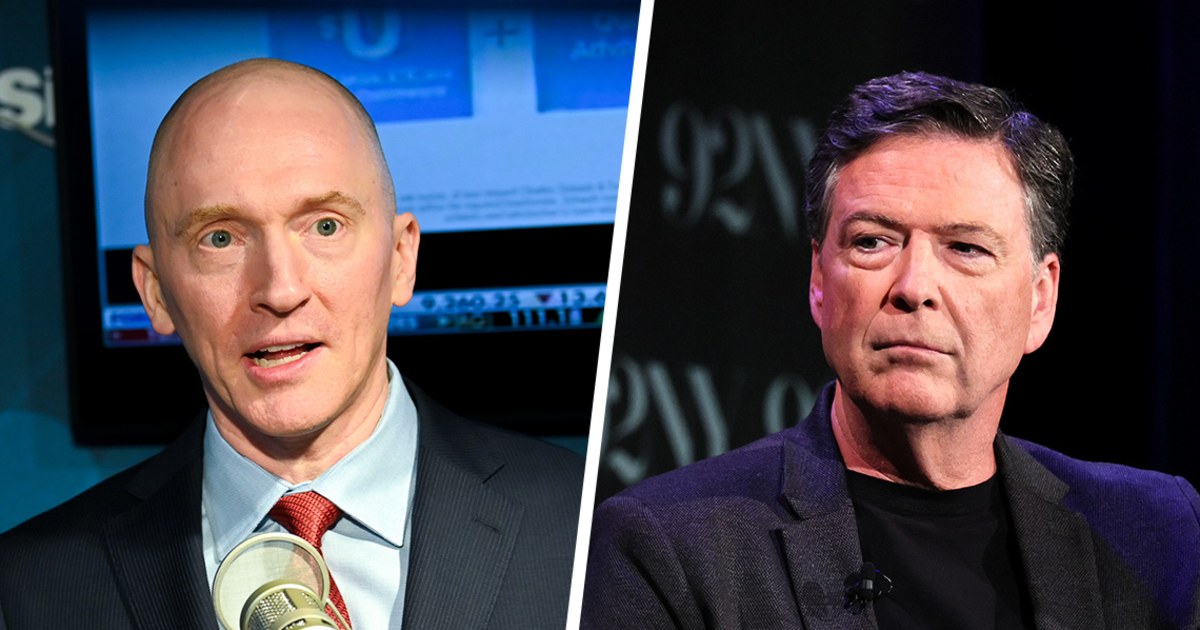
Supreme Court rejects former Trump adviser Carter Page’s bid to revive James Comey lawsuit
Read Original Source
WASHINGTON — The Supreme Court on Monday rejected former Trump campaign adviser Carter Page’s attempt to revive a lawsuit against former FBI Director James Comey and others over their roles in a federal investigation into Russian interference in the 2016 election. Subscribe to read this story ad-free Get unlimited access to ad-free articles and exclusive content. Page’s lawsuit focused on inaccuracies in warrant applications that sought permission from a judge to carry out surveillance on him as part of the probe.
AI Summary
Main Idea: The Supreme Court rejected Carter Page’s effort to revive his lawsuit against James Comey over FBI surveillance tied to the Russia investigation.
Key Points:
- Page said FBI warrant applications used to surveil him were inaccurate and faulty.
- A Justice Department watchdog later found problems with those warrant requests.
- Lower courts had already ruled that Page filed his lawsuit too late.
- Only the claims against Comey and other former FBI officials were still part of the Supreme Court appeal after the government claims were settled.
Impact on the People
Negative Impact
The ruling leaves unresolved public anger over FBI surveillance errors, which can deepen distrust in law enforcement and government among voters and taxpayers.
Positive Impact
The Court’s decision may bring some finality to a long legal fight, saving more court time and public attention.
How did each entity affect people?
Rate how each entity in this article affected the American people.
- Primary:Carter Pageperson
- Major:Director James Comeyperson
Candidate Entities10 candidates · 5 weighted vote min · 70% decision
- Carter PagepersonPrimaryEvaluated
Former Trump adviser whose lawsuit and appeal are the main subject of the article.
Include 0 (0%)Ignore 0 (0%)5 to threshold - Director James ComeypersonMajorEvaluated
Former FBI director named as a central defendant in the lawsuit.
Include 0 (0%)Ignore 0 (0%)5 to threshold - Supreme Court of the United Statesgovernment agency or bodyPrimaryAI selected
Central court that rejected Carter Page’s bid to revive the lawsuit.
Include 0 (0%)Ignore 0 (0%)5 to threshold - Federal Bureau of Investigationgovernment agency or bodyMajorAI selected
Agency whose officials’ surveillance-related actions are at the center of the lawsuit.
Include 0 (0%)Ignore 0 (0%)5 to threshold - Justice Departmentgovernment agency or bodyMajorAI selected
Department involved through the watchdog findings and the settlement of claims against the federal government.
Include 0 (0%)Ignore 0 (0%)5 to threshold - Donald TrumppersonContextCandidate
Mentioned as the former president whose administration settled related claims and who defended Page.
Include 0 (0%)Ignore 0 (0%)5 to threshold - Justice Department watchdoggovernment agency or bodyContextCandidate
Oversight body whose investigation found the warrant applications were faulty.
Include 0 (0%)Ignore 0 (0%)5 to threshold
Comments 0
Comments here are the same thread shown when this article appears in The Pulse.
No comments on this article yet.
Sign in to comment