Iran war: Inside Tehran as the civilian toll of US-Israeli strikes rises
Read Original Source
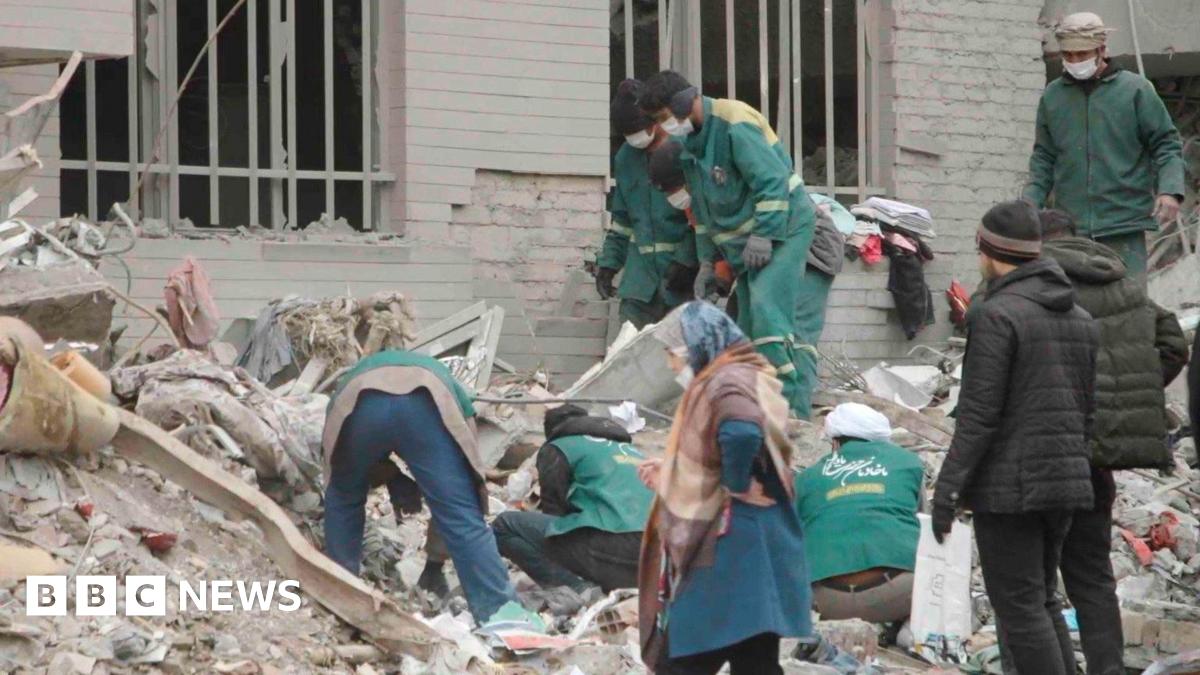
Military experts say the scale and spread of the damage observed in Resalat is consistent with the use of a powerful bomb called the Mark 84 A mother stands by the rubble, crying out for her daughter. For days she has been waiting for rescue workers to dig through the flattened remains of what was once her daughter's flat in Resalat, a residential district in eastern Tehran. "They don't have the manpower to get her out," the woman says. "My daughter is under the rubble... she's afraid of the dark.
AI Summary
Main Idea: US strikes on Tehran have hit civilian areas as well as military-linked sites, leaving many residents dead, homeless, and afraid.
Key Points:
- In Tehran’s Resalat district, an Israeli air strike destroyed apartment blocks and left residents digging through rubble for missing family members.
- BBC analysis says the blast spread far beyond the named target and may have come from a very large bomb used in a crowded area.
- The article says many strikes in Iran have hit state-linked sites that sit inside busy neighborhoods, raising concerns under international law.
- Residents in Tehran say they have gotten little warning, no clear shelter plan, and little help from the Iranian government during the attacks.
Impact on the People
Negative Impact
US strikes on Iran could raise oil prices, add market volatility, and increase the risk of wider war that could hit US consumers and taxpayers.
Positive Impact
No clear positive impact identified.
How did each entity affect people?
Rate how each entity in this article affected the American people.
- Primary:Irancountry
- Primary:Tehrancity
- Primary:United Statescountry
Candidate Entities9 candidates · 5 weighted vote min · 70% decision
- IrancountryPrimaryEvaluated
Central country being struck in the war and the main setting for the civilian impact described.
Include 0 (0%)Ignore 0 (0%)5 to threshold - TehrancityPrimaryEvaluated
Main city where the civilian toll, damage, and strikes are extensively documented.
Include 0 (0%)Ignore 0 (0%)5 to threshold - United StatescountryPrimaryEvaluated
Central belligerent described as participating in strikes through US Central Command and part of the war narrative.
Include 0 (0%)Ignore 0 (0%)5 to threshold - Basijgovernment agency or bodyMajorAI selected
Targeted Iranian paramilitary force used to explain the strikes on state-linked sites.
Include 0 (0%)Ignore 0 (0%)5 to threshold - BBC Eyemedia outletMajorAI selected
Investigative unit whose analysis, footage, and reporting drive the article’s evidence and conclusions.
Include 0 (0%)Ignore 0 (0%)5 to threshold - Islamic Revolutionary Guard Corpsgovernment agency or bodyMajorAI selected
Iranian military organization tied to the targeted Basij and central to the article’s military context.
Include 0 (0%)Ignore 0 (0%)5 to threshold - United States Central Commandgovernment agency or bodyMajorAI selected
Named U.S. military command cited for its strike activity across Iran.
Include 0 (0%)Ignore 0 (0%)5 to threshold
Comments 0
Comments here are the same thread shown when this article appears in The Pulse.
No comments on this article yet.
Sign in to comment