Supreme Court clears path for dismissal of Steve Bannon's conviction
Read Original Source
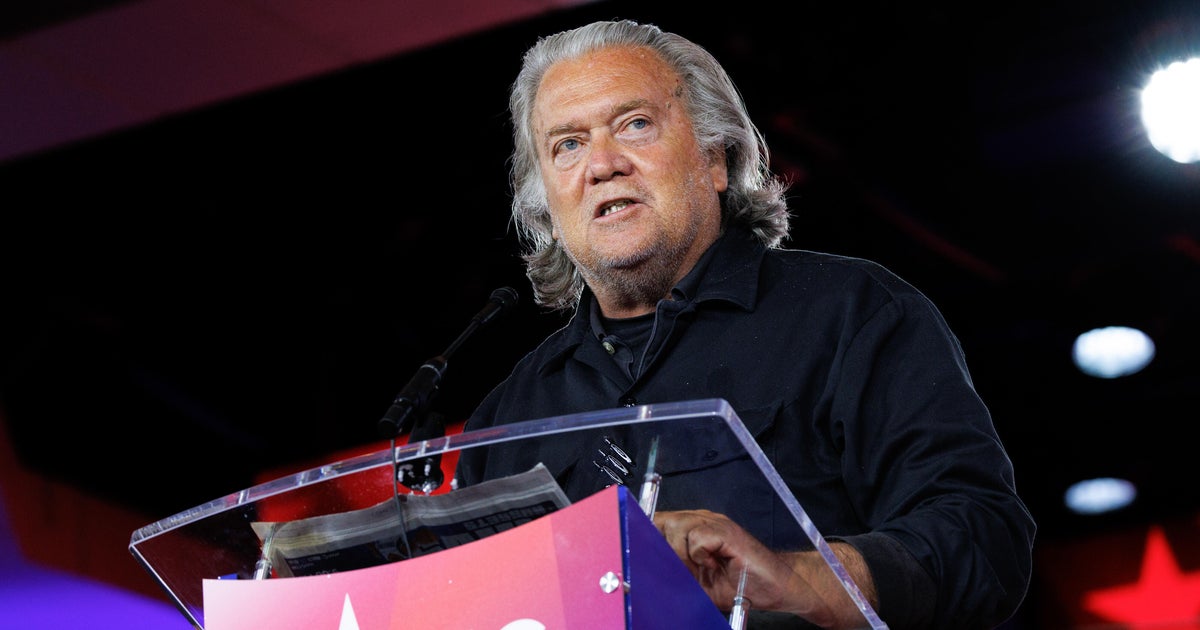
Washington — The Supreme Court on Monday set aside a lower court decision that upheld the conviction of Steve Bannon, a former White House adviser to President Trump, on two counts of contempt of Congress, paving the way for the case to be dismissed. In addition to wiping away the ruling that left Bannon's conviction in place, the Supreme Court sent his case back to the federal appeals court in Washington, D.C., for further proceedings. The court addressed Bannon's appeal in a brief order with no noted dissents.
AI Summary
Main Idea: The Supreme Court cleared the way for Steve Bannon’s contempt conviction to be dismissed, after the Justice Department asked to drop the case.
Key Points:
- The court set aside a lower court ruling that had kept Bannon’s conviction in place.
- It sent the case back to the federal appeals court in Washington, D.C., for more proceedings.
- Bannon had served a four-month prison sentence in 2024 after losing his bid to stay out of prison during appeal.
- The case began after Bannon refused a House Jan. 6 committee subpoena, was convicted on two contempt counts, and later had the Justice Department say dismissal was in the interests of justice.
Impact on the People
Negative Impact
The dismissal may weaken trust that people tied to politics will face the same legal rules as everyone else.
Positive Impact
The Justice Department can end a costly case, which may save taxpayer money and court time.
How did each entity affect people?
Rate how each entity in this article affected the American people.
- Primary:Steve Bannonperson
- Primary:Supreme Courtgovernment agency or body
- Major:Justice Departmentgovernment agency or body
Candidate Entities10 candidates · 5 weighted vote min · 70% decision
- Steve BannonpersonPrimaryEvaluated
Primary subject of the article; his contempt conviction is the central case affected by the Supreme Court’s order.
Include 0 (0%)Ignore 0 (0%)5 to threshold - Supreme Courtgovernment agency or bodyPrimaryEvaluated
Central court that set aside the lower court ruling and cleared the path for dismissal.
Include 0 (0%)Ignore 0 (0%)5 to threshold - Justice Departmentgovernment agency or bodyMajorEvaluated
Federal department that asked the district court to dismiss Bannon’s criminal case.
Include 0 (0%)Ignore 0 (0%)5 to threshold - D. John SauerpersonContextCandidate
Named Solicitor General whose filing supported dismissal of the case.
Include 0 (0%)Ignore 0 (0%)5 to threshold - House Jan. 6 committeegovernment agency or bodyContextCandidate
Congressional committee that issued the subpoena leading to Bannon’s contempt case.
Include 0 (0%)Ignore 0 (0%)5 to threshold - Mr. TrumppersonContextCandidate
Mentioned as the former president connected to the subpoena dispute and executive privilege claims.
Include 0 (0%)Ignore 0 (0%)5 to threshold - U.S. appeals court in Washington, D.C.government agency or bodyContextCandidate
Appellate court that previously upheld Bannon’s conviction and received the case back for further proceedings.
Include 0 (0%)Ignore 0 (0%)5 to threshold
Comments 0
Comments here are the same thread shown when this article appears in The Pulse.
No comments on this article yet.
Sign in to comment