Appeals court rules Trump's White House ballroom construction can temporarily move forward
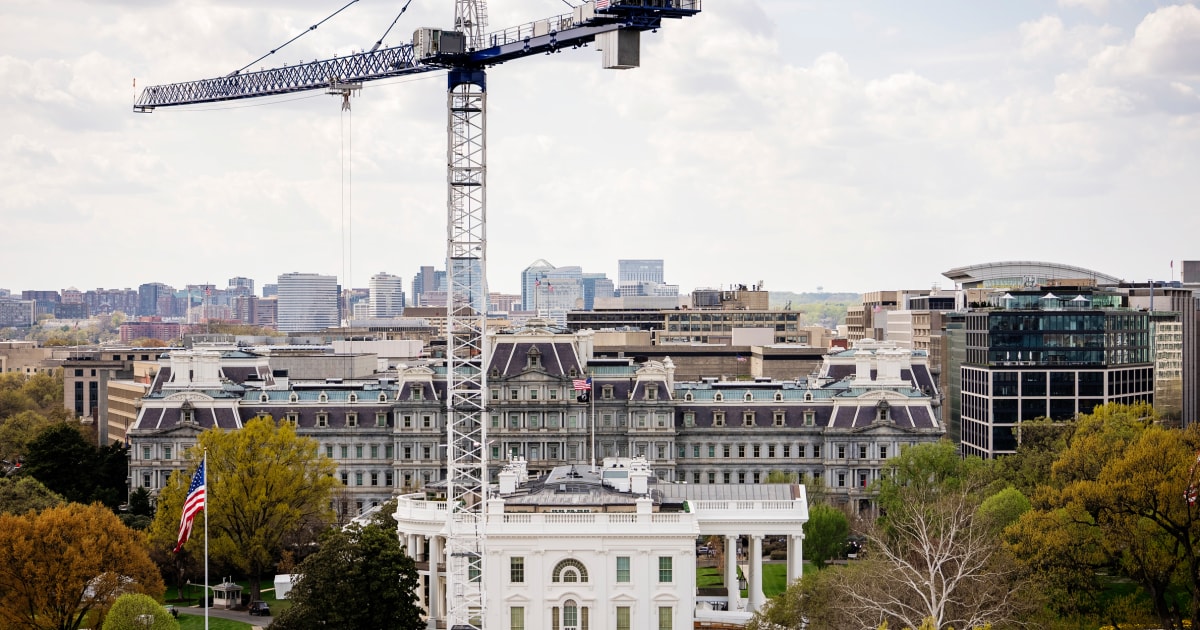
Read Original Source
A federal appeals court on Saturday temporarily allowed the construction of President Donald Trump’s White House ballroom to move forward while the administration challenges a lower court order that said the project exceeds the president’s authority. Subscribe to read this story ad-free Get unlimited access to ad-free articles and exclusive content. The 2-1 decision by a three-judge panel for the U.S. circuit court in Washington, D.C.
AI Summary
Main Idea: A federal appeals court let President Donald Trump’s White House ballroom project keep moving for now while it reviews whether he had the authority to start it.
Key Points:
- The court’s 2-1 ruling allows construction to continue through April 17 while the judges consider the case in more detail.
- A lower court had ordered the work to stop after finding Trump likely needed congressional approval for the $400 million project.
- The National Trust for Historic Preservation says the ballroom plan is illegal and that the administration’s security claims are exaggerated.
- Trump’s team says the ballroom is needed for safety, security, and large events, and that no taxpayer money is being used.
Impact on the People
Negative Impact
The ballroom fight could add public cost, legal uncertainty, and more government attention on a luxury project instead of other needs.
Positive Impact
Supporters say the construction may improve White House security and event space for future official use.
How did each entity affect people?
Rate how each entity in this article affected the American people.
- Primary:National Trust for Historic Preservationnonprofit / NGO
- Primary:President Donald Trumpperson
Candidate Entities8 candidates · 5 weighted vote min · 70% decision
- National Trust for Historic Preservationnonprofit / NGOPrimaryEvaluated
Primary opposing organization challenging the project in court and reacting to the appeals court ruling.
Include 0 (0%)Ignore 0 (0%)5 to threshold - President Donald TrumppersonPrimaryEvaluated
Central public official whose White House ballroom project and stated rationale are the main focus of the article.
Include 0 (0%)Ignore 0 (0%)5 to threshold - United States Court of Appeals for the District of Columbia Circuitgovernment agency or bodyPrimaryAI selected
The appeals court that issued the temporary decision allowing construction to continue.
Include 0 (0%)Ignore 0 (0%)5 to threshold - U.S. District Judge Richard LeonpersonMajorAI selected
Named judge whose lower-court injunction and reasoning are central to the case.
Include 0 (0%)Ignore 0 (0%)5 to threshold - United States Department of Justicegovernment agency or bodyMajorAI selected
Government body advancing the administration’s legal and security arguments in court filings.
Include 0 (0%)Ignore 0 (0%)5 to threshold - President and CEO Carol QuillenpersonContextCandidate
Named leader of the National Trust quoted reacting to the ruling, but not the central subject.
Include 0 (0%)Ignore 0 (0%)5 to threshold
Comments 0
Comments here are the same thread shown when this article appears in The Pulse.
No comments on this article yet.
Sign in to comment